Founded in a small Toronto warehouse in 1957 as Metro Sportswear, Canada Goose evolved from a niche manufacturer of utilitarian cold-weather gear into an internationally recognized luxury outerwear brand.
Canada Goose’s rise mirrors fashion’s broader obsession with authenticity and extreme utility.
Rather than abandoning its utilitarian origins, the brand recalibrated them, using targeted collaborations and refined profiles to secure its place in modern cold-weather dressing.
Those aforementioned collaborations are the focus of our Artifacts feature. This month, we connected with Jeff Reyes, Archivist at Canada Goose, to discuss the company’s donation of three OVO x Canada Goose collaborations to The Hip Hop Museum.
Adam Aziz: I was hoping you could introduce yourself and tell us what you do at Canada Goose.
Jeff Reyes: Of course. I’m Jeff Reyes, and I’m the archivist here at Canada Goose. I’ve been at Canada Goose for fourteen years strong. I started as a graphic design intern. That’s what I went to school for. And so over the years, I was unknowingly absorbing a lot of the moments that we were going through because, with the brand, in a short period of time, we went through an enormous amount of growth. And so that was going from our previous space, which was smaller than the head office that we currently work at, to going public, to working with brand partners and collaborators, to moving into different categories like footwear. And so all of that I was around for.
During my time as a graphic designer, I also built many decks for our executive team. And so in that time I was learning about the business that way. I was learning about public speaking that way and just allowing myself to absorb information.
AA: And what is your role now?
JR: Many things. I am a bit of a Swiss Army knife and not a Ginsu knife. And what I mean is I’m a jack of all trades, and master of a couple of things. But I’d say primarily it is making sure that as we evolve, there’s a thread that gets pulled through. There’s a high level of preservation required for the brand, especially since we’ve been around for so long. And so I come through with that POV.
I also ensure that, from a housekeeping standpoint, the archive is maintained and that we continue to add to it, because, unfortunately, we don’t have all the things we made in previous years.
I’m continuously scouring platforms like eBay and Poshmark, talking to vintage pickers and vintage store owners, even pushing that into a global scale to be able to source things that we don’t have or source things that have a high level of storytelling on them so that when we do decide to put that in a window at a shop, whether that be our own or a retailer that is selling our goods, that we can then storytell in a wholesome way to have that visual of what we looked like in the past to what we look like in the current day.
AA: Let’s talk about the specific donations you made to The Museum.
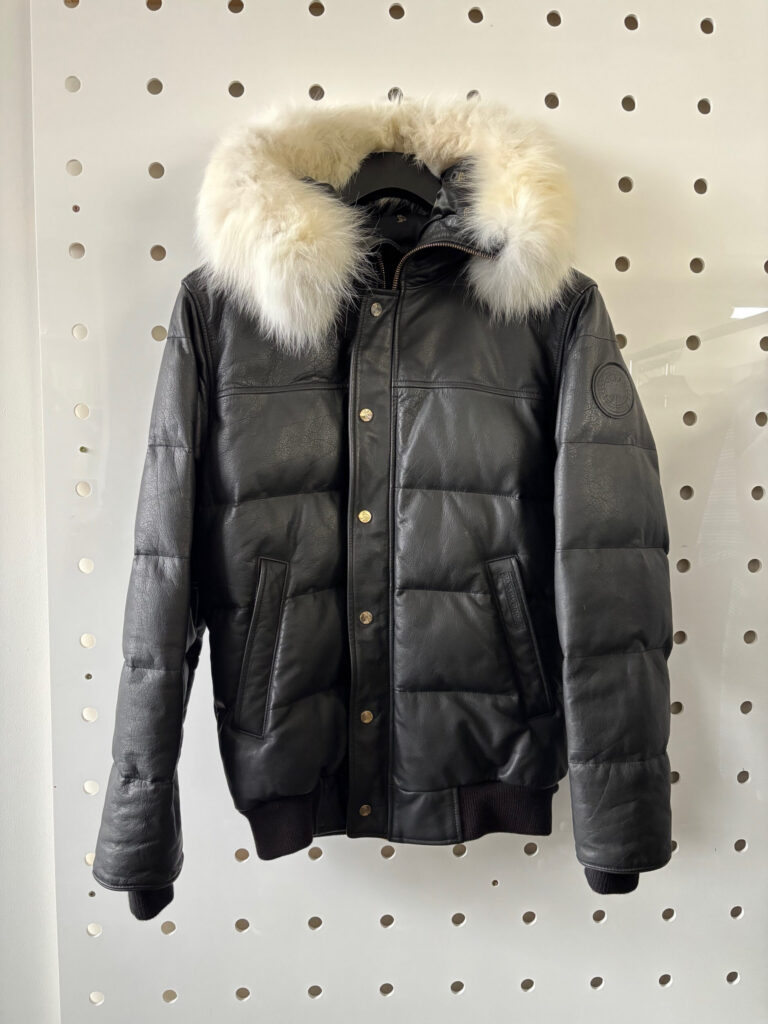
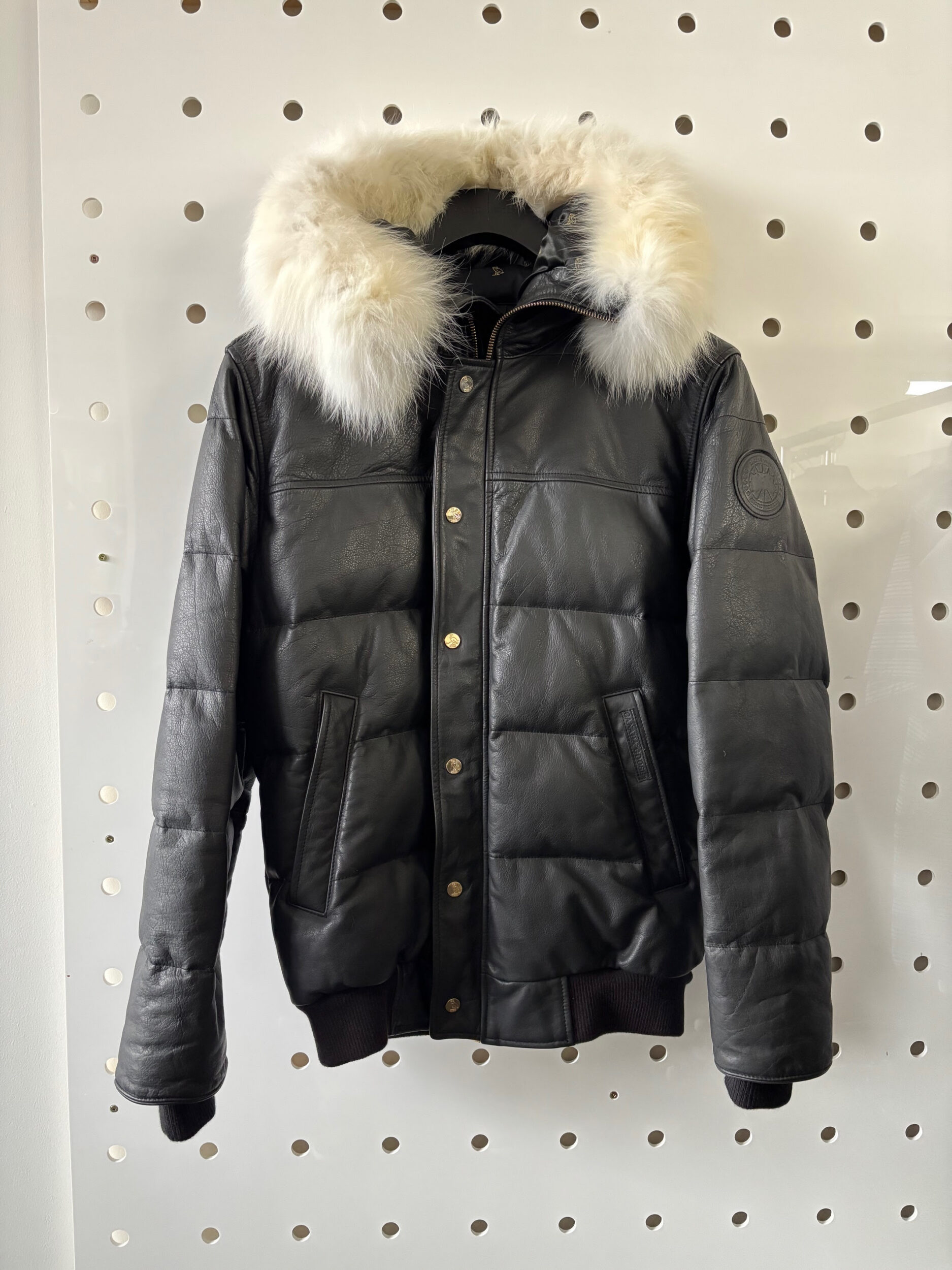
JR: It’s the leather OVO bomber. It’s the second collaboration we did with OVO from 2012. The first was in 2010.
The 2010 version, to touch on that real quick, was a flip on one of our mainline styles called the Chilliwack. So, in a similar way to a lot of collaborations these days, it was like a small percentage of a change to a familiar vehicle.
But then comes 2012. We decided to do a leather version of a Chilliwack with different quilting. It has a horizontal quilt pattern on the exterior. And then also what is geeked out about it is the hardware on it is 24-karat gold-plated.
It has that level of bouginess, which is also, in a way, a reflection of the evolution of the OVO squad. You know, starting at grassroots with just like a very basic piece and then as they were getting their paper up, it also then translated into the things that they had wanted.
AA: How did the OVO collaboration come about?
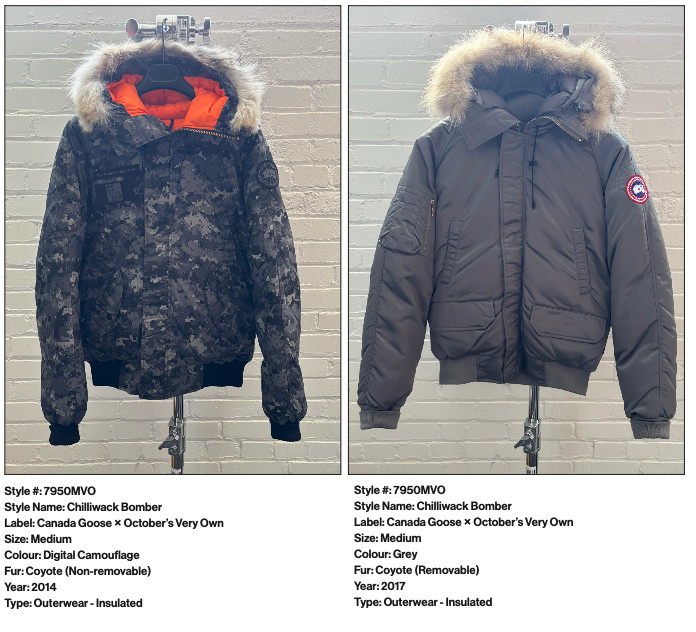
JR: I wasn’t around in 2010, but this is what I’ve been told. From a marketing standpoint, it was a bit of a guerrilla tactic they used. They pulled up to our head office at the time, which was on Caledonia and Eglinton in Toronto, and I believe it included Drake and two other partners. And they just chatted directly with our CEO at the time.
From what I was told, they came through with a vision. They came through with purpose. And, with purpose being one of our foundational pillars at the brand, it aligned with the vision at the time. And from there, it became a multi-year collaboration through 2023.
AA: As a brand, how does Canada Goose view Hip Hop?
JR: It’s more of an organic play, right? From a cultural standpoint, we embrace it for one. We’ve had Pressa wear Canada Goose; 50 has worn us on stage. In the early days, one of our first collaborations came through an introduction from Clark Kent to Alife, which was actually our first Hip Hop collab.
AA: On Drake’s “Summer Sixteen”, he says the line “That Kai’s kitchen in a Canada Goose.” Is that the most famous Rap lyric to reference Canada Goose?
JR: I feel like at the moment that is the one. At some point I might have heard something else. But yeah, that’s the one.
AA: Why do you think it’s important Hip Hop has its own physical Museum space?
JR: It’s important because there’s a culture that is, in a way, undiscovered. You know, a lot of people don’t know about it, and it was not as widely publicized as, like, rock and roll was back in the day. And so, there’s a beauty in a level of discovery of like what Hip Hop can bring.
And then also the evolution that us as older people or older heads are like seeing it turn into. You know, some of it, depending on who you ask, is amazing. Some of it, depending on who you ask, is not. But to put something or have something in front of you that you can make a decision over is super important, which means that there’s a constant evolution happening, or that they’re taking what happened in the past as a foundation and making something new out of it.
Follow Canada Goose on Instagram.