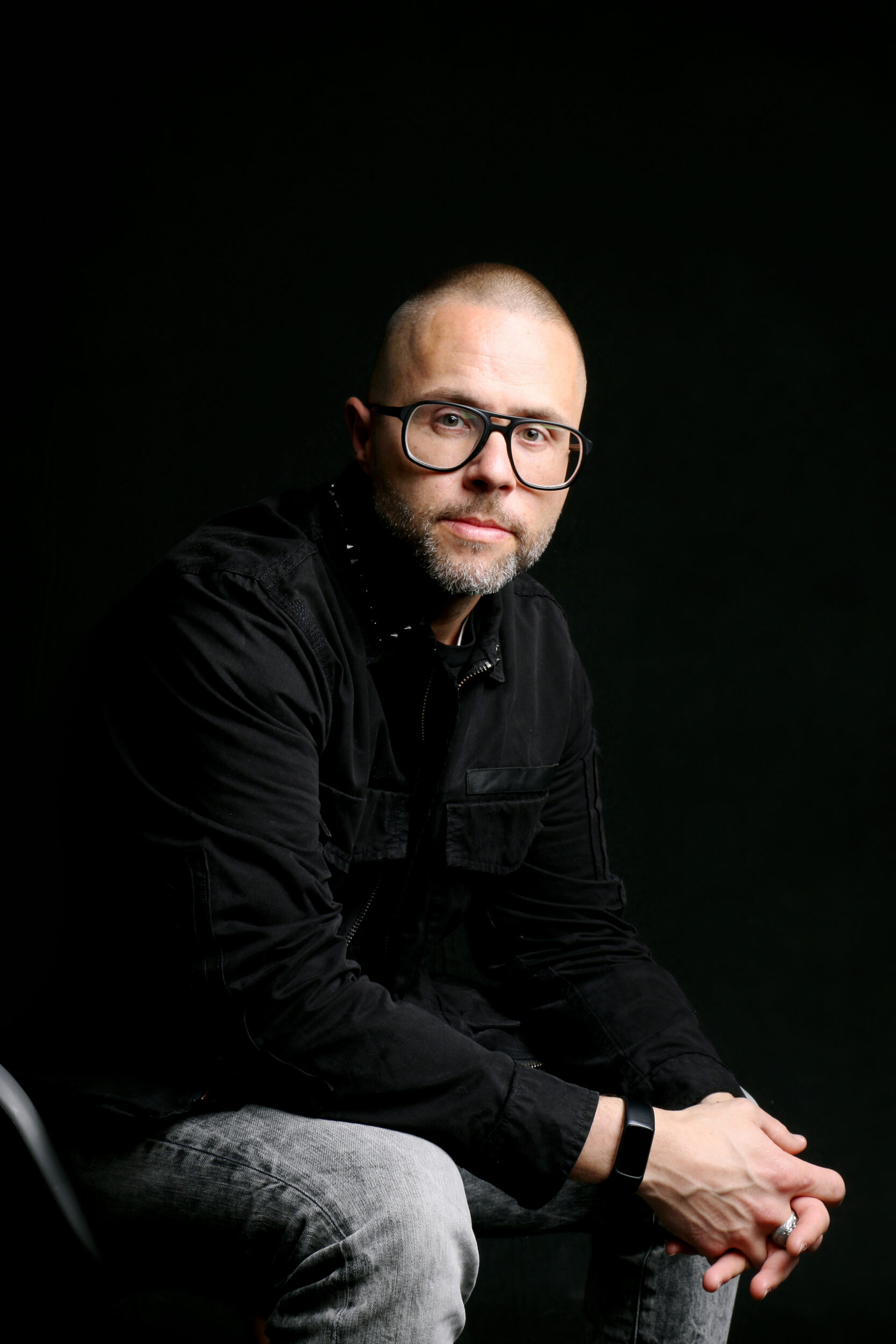
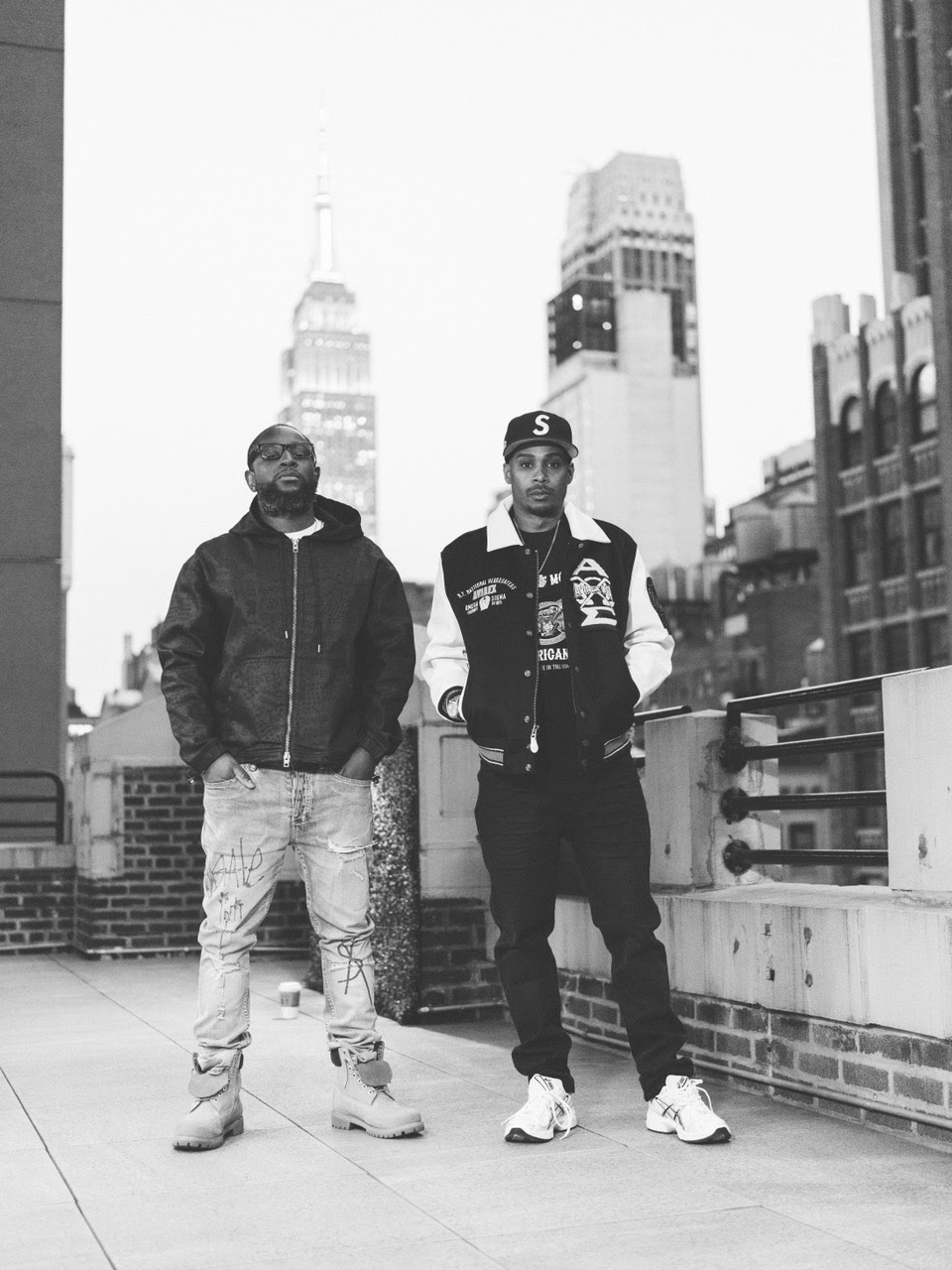
A pioneer of the early New York City graffiti movement, TOPAZ stands as a foundational figure and a key member of The Ebony Dukes, widely recognized as the first organized graffiti crew in the Bronx. Emerging from the vibrant creative energy of Hewitt Place in the late 1960s and early 1970s, TOPAZ and his contemporaries transitioned from neighborhood tagging to a structured collective identity that would define the genre’s evolution. By establishing a crew dynamic during the culture’s infancy, he helped lay the groundwork for the collaborative “writer” traditions and stylistic competitions that eventually propelled Bronx graffiti from local brick walls to a global phenomenon.
The Hip Hop Museum caught up with TOPAZ to talk about his donations to The Museum, doing pieces on trains in Hip Hop’s early days, graffiti’s place in Hip Hop today and more!
Adam Aziz: What do you remember about the early days and your first exposure to graffiti and Hip Hop culture?
TOPAZ: We were in a gang. The gang was called the “Ghetto Wolves.” We wrote our gang’s name on the block’s wall. And we wrote our names. That was to let people know that they were in our territory.
That’s how we started writing, and we wrote the names of our buildings. And you know, the names of our friends’ buildings, and we really just started writing on the streets, primarily, you know, ironically, when you join a gang, the gang actually gives you a name. I actually got my name from Staff 161. He’s the one who named me Topaz.
AA: What does the name mean?
TOPAZ: I took it as meaning that I’m a jewel. Topaz is a November birthstone.
AA: In the early days, you could make the argument that graffiti and breaking were further ahead as elements of the culture than MC’ing and DJ’ing. What was the convergence of those different elements like in the early days?
TOPAZ: We had house parties back then. So, breaking really started at the house parties. I mean, we moved to the street, but originally we were breaking at the house parties.
You had Don Cornelius and Soul Train. There wasn’t a lot on television then, but especially not a lot of black people. But every Saturday at 11 am, Soul Train came on. Everybody was glued to the TV, watching someone of their own color. We watched the dancers on that show and added our own stuff.
AA: Today, graffiti has shifted from the streets to the art galleries. How do you feel about that shift?
TOPAZ: I find it amazing that it even went this far, and seeing its evolution is quite amazing as well. I still remember, you know, in the early 70s, I was in the tunnel with my riding partner, and we were doing pieces in this tunnel. And when I came out of the tunnel, I thought how amazing it was that we were doing this in this tunnel with trains flying by. And it hit me like this is crazy stuff. But we were having a good time and weren’t thinking about galleries or anything like that. We were just enjoying life and finding ways to make ourselves feel relevant.
For us back then, the Bronx was our world. So for us, if we were famous in the Bronx, we were world famous, as far as we were concerned.
AA: How dangerous was practicing your art back in the 70s and early 80s?
TOPAZ: We were poor and didn’t have money, and we couldn’t afford spray paint. We had to steal the paint. Some days, you rack up 30 cans going in and out of stores, and you never racked up paint in your own neighbourhood. You had to go to Queens or somewhere where it was a little easier because, you know, you can walk in the store in the Bronx, and they see you coming, they’re going to be watching you. So there’s no way you’re going to steal anything.
So first you’ve got to steal the paint. Then you had to hop on the train because you couldn’t afford train fare. So, you’ve got to hop on the train with the stolen paint to get back home. Now, if you want to go to a yard or somewhere to write, you’ve got to hop on the train with a shopping bag full of paint.
The crazy thing about being in a train tunnel is the way the sound works. You would think you would be able to hear the train from far off, but really, you can’t hear that train until it’s right upon you. So you could be doing a piece, most of the time you would see the light from the train before you actually heard it. You would have to jump between the railings to hide from the conductor or from the engineer so they couldn’t see you. But they could smell paint in the tunnel because, you know, the smell of paint was everywhere. That was pretty dangerous.
AA: You also had a pretty accomplished boxing career. Talk to me about.
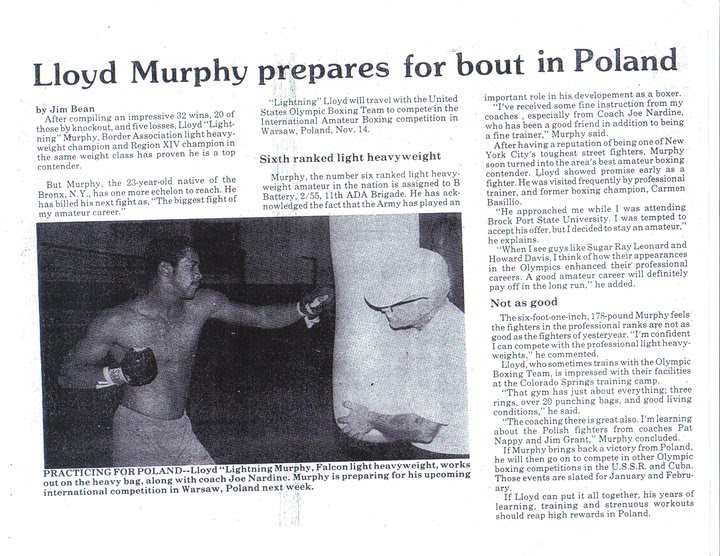
TOPAZ: Originally, I really didn’t want to fight, but you know, guys pick on you, and bullies in school just forced me to fight. And I became really good at it. Somebody challenged me. Oh, you think you’re so tough. Why don’t you get in the ring and fight against guys who know what they’re doing? So the challenge was given to me, and I was like, OK, they’re right. If I think I’m so tough, why don’t I get in the ring?
I found out that boxing in the ring was a lot different from fighting on the streets because guys in the ring knew what they were doing, so you couldn’t do what you were doing to the guys on the street. I found that out right away. Actually, my first fight, I got my nose broken. So I went back to the corner at the end of the first round, and I had this blood just pouring out of my face, and I’m thinking it’s over, and my coach was like, “when you go into the second round, break his jaw, Murph” and I went out in the second round and broke the guy’s jaw.
AA: You made some donations to The Hip Hop Museum, and I want to talk about those.
TOPAZ: Yes, it was my honor.
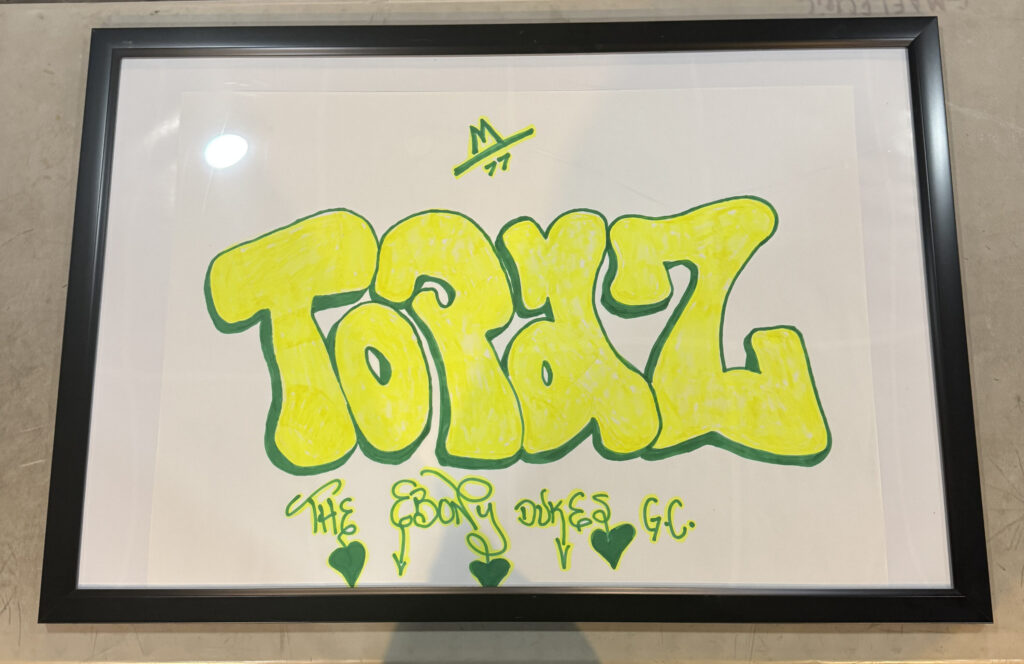
AA: Was there anything special about the original work or donations that you wanted to talk about?
TOPAZ: Let me give a shout-out to Keith Baugh, who took the picture of the Topaz/Riff piece. There weren’t a lot of pictures of my work around, but Keith had been documenting a lot of this stuff. He called me a couple of years ago and told me he had a picture of something I might be interested in. He showed me the picture of this piece I did in 1972.
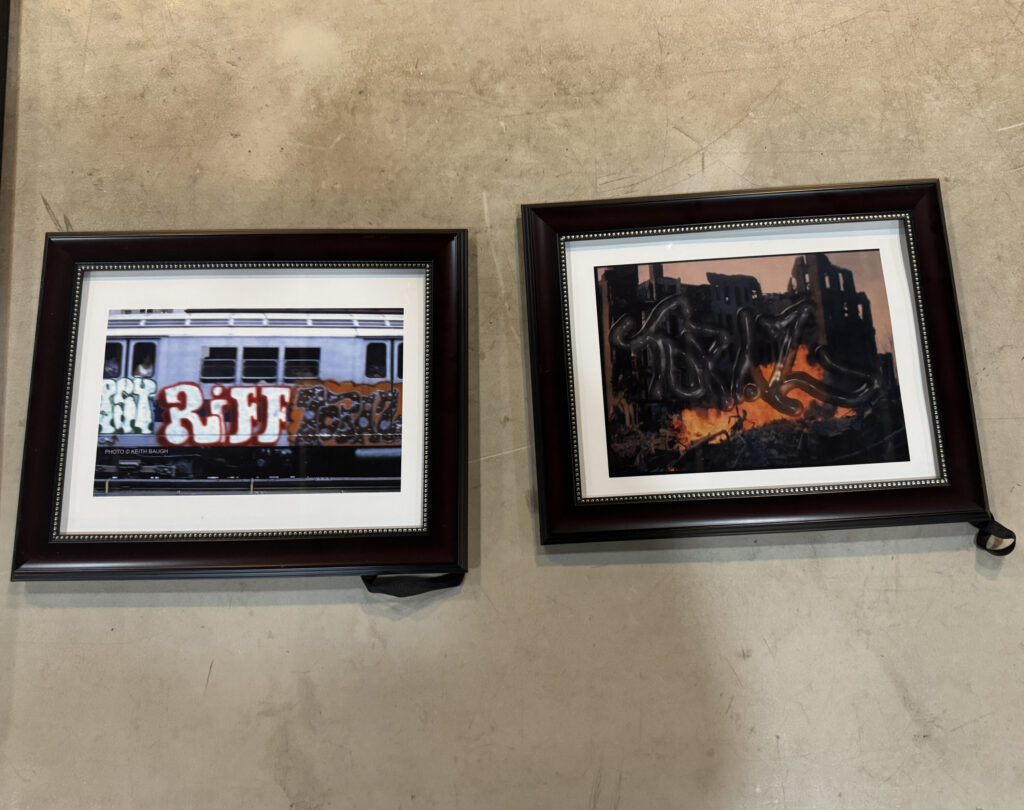
We never had a camera to take pictures of our stuff, so most of the pictures were taken by somebody else. But I was never able to get a hold of pictures until now. I knew I had to get this into the Museum.
AA: What do you think graffiti’s place in Hip Hop culture is today?
TOPAZ: You have some people who say graffiti isn’t part of Hip Hop. Are you familiar with Stay High 149? He used to write his name, but he also used to write “voice of the ghetto.” This started in 1969. He started writing “voice of the ghetto” because he felt that our expression was the voice of the ghetto. We didn’t have things that a lot of other people had. This was our way of speaking to the world that we existed. At least that’s what I got out of the voice of the ghetto.
Through the writing, and ultimately through the DJing, the break dancing, and everything else involved in Hip Hop to us, we were making it known that here we are, we exist, and we have worth. We have skill, we have something to add to society. We’re giving them our talents. We’re giving them our skills.
When I first heard “Rapper’s Delight” on the radio, I thought they were selling us out because Hip Hop was sacred to me, and I didn’t see it as something to be sold. All that commercialization takes away from the kid who is trying to make something, and it can only go as far as the record label lets it. Sometimes the money can get in the way of the love.
I believe graffiti is part of Hip Hop because it comes from the voice of the ghetto. If you’re going to ask me what Hip Hop is, I will say it’s the voice of the ghetto created by Bronx teenagers.
AA: Why do you think it’s important that Hip Hop has its own physical Museum space?
TOPAZ: I’m so grateful to Rocky and his vision, man. I was so happy when I heard about it because I don’t live in New York City anymore. I’m all over the place, and I’ve been all over the world. I go places, and people talk about Hip Hop like, oh, yeah, no Hip Hop’s from here. No Hip Hop’s from there. And I’m like, listen, first of all, Hip Hop is a Bronx street term.
Lovebug Starski is the one who made the term famous in the Bronx. I don’t care what anybody says; I was there. He’s the one who made the term Hip Hop famous.
So for them to have a Hip Hop museum in the Bronx, there is nothing more special. I told Rocky this is going to be the most amazing place on planet Earth. When this thing opens, there’s not going to be anything on this planet to touch The Hip Hop Museum. Nothing.
Follow TOPAZ on Instagram.