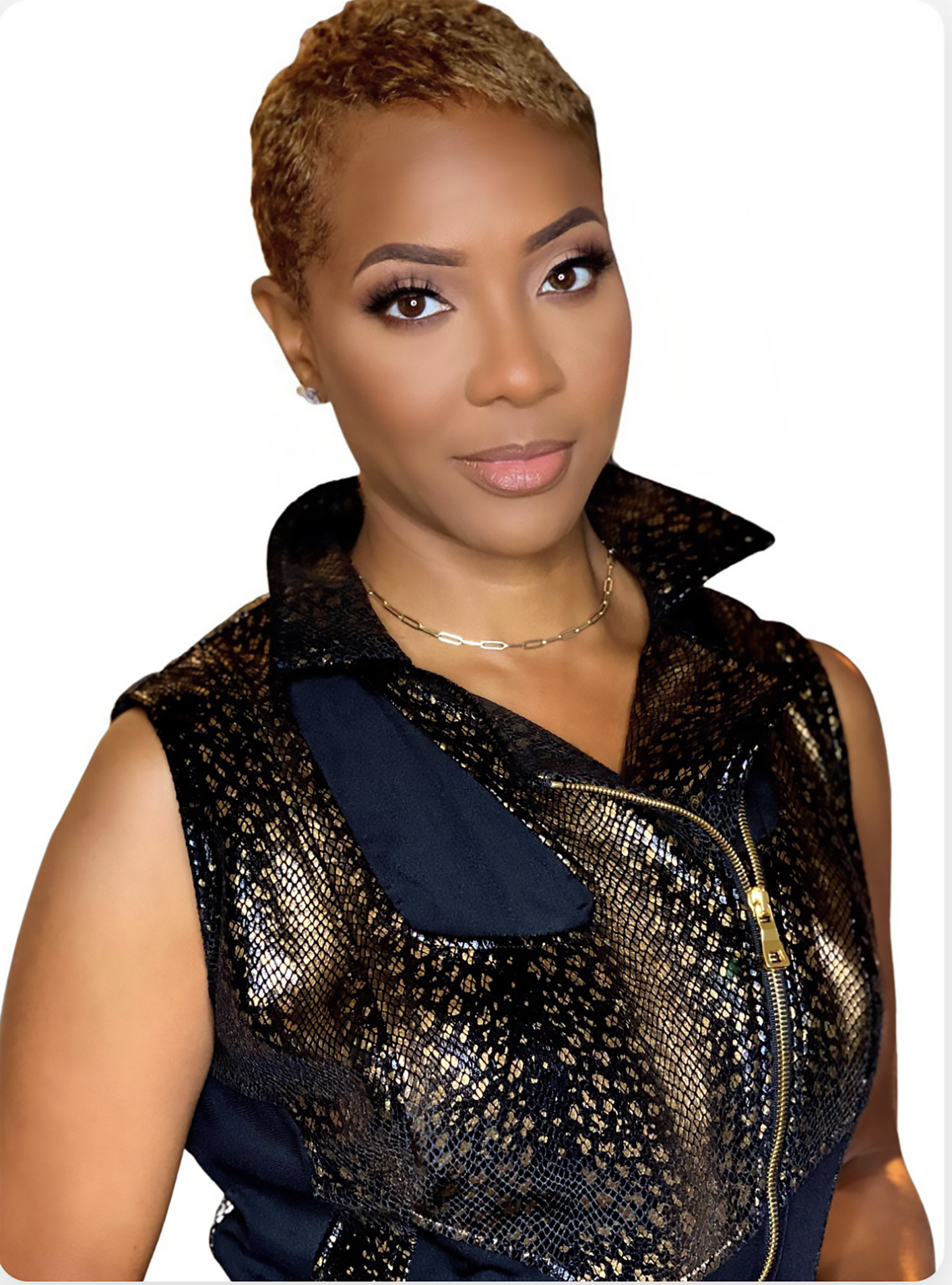
MC Lyte is a true pioneer and a cornerstone of Hip Hop history. Known for her distinctively smooth yet authoritative voice and razor-sharp lyricism, she transitioned the role of the female MC from the periphery to the forefront of the genre. Her storytelling ability and sophisticated wordplay on tracks like “Paper Thin” and “10% Dis” established her as a lyrical powerhouse who could outmaneuver her peers regardless of gender, earning her a permanent place in the pantheon of the “Golden Era.”
Beyond her early discography, Lyte’s longevity is a testament to her versatility as an artist and a businesswoman. She successfully crossed over into the mainstream with hits like “Ruffneck”, which made her the first female solo rapper to achieve a gold certification, and the iconic “Keep On, Keepin’ On.”
Throughout her decades-long career, she has evolved into a multi-hyphenate talent, finding success in acting, voice-over work, and DJing, all while remaining a dedicated advocate for female empowerment and the preservation of Hip Hop culture.
The Hip Hop Museum caught up with MC Lyte to talk about her storied career, being the first female MC to perform at The White House, beef in Hip Hop, and more.
Adam Aziz: You’re one of the few artists who have been around for almost all eras of Hip Hop. Over the years, how have you seen the culture change?
MC Lyte: I think the economics have grown, proving their value in entertainment, culture, and community. However, it saddens me that, while many benefit financially, artists remain in a difficult situation and do not receive all they deserve monetarily.
AA: And how about the emotional attachment to the music? In the era of physical music sales, people used to yearn for ripping the packaging off a CD and reading the liner notes. Do you think we’ve lost that physical connection?
MC Lyte: Probably for some, for those who are newer to music and just the experience to be had with music, but I’d kind of like to think people like what they like. It doesn’t matter how much of it comes out; it doesn’t negate what you just discovered. So, I think it’s an individual experience. And I do think there are so many other ways now that a true, hardcore fan can stay engaged beyond liner notes and beyond the artwork of the album. There are many different ways now for them to attach themselves to or be connected to those who are influenced by, inspired by, and crazy about their art and music. What it means is that everyone may not be talking about the same music at the same time anymore. But I think as an individual, nobody’s putting down the Kendrick album when it first came out because somebody else came out.
AA: You were the first female MC to perform at The White House. What’s it like to look back on that now, given today’s political climate?
MC Lyte: It feels like ages ago, feels like so long ago that took place. I was in the company of some great folks that evening. It was Carol Burnett, Usher, Smokey Robinson, and James Taylor. Lucky for me, Queen Latifah had time to come and do the introduction for the segment of my performance. So it was an incredibly memorable night. But yeah, I do feel like we are in another time, like a time warp from that particular era.
AA: Why do you think so many rappers have been able to transition so seamlessly to acting?
MC Lyte: Many of the roles that we take on or that have been written for us kind of mimic our personalities, and it’s just a freedom of expressing ourselves. And so, I think that’s one reason. The character that Ice-T plays and has played for decades is basically who he is. I mean, he’s not a cop, but his demeanor and the way he speaks, the way he moves, is true to who he is.
And so, I think most of the roles that we see artists play are pretty much true to life in a sense. And then, it’s a lot of us that haven’t made that transition and probably don’t even really care to. I think the folks that we’re talking about really either had acting on their mind or were just so natural with it that somebody else saw that for them.
AA: You’re a pioneer of the diss track, having released one of the greatest diss tracks of all-time in “10% Dis.” Coming out of what is arguably the greatest Hip Hop battle of all-time between Drake and Kendrick, and more recently, we’ve seen T.I. Vs. 50 Cent. What do you think the place is for beef and diss tracks in Hip Hop Today?
MC Lyte: I think it’ll always have a place because that’s what Hip Hop is about: “I’m the baddest, and you’re not.” And so, yeah, Kendrick and Drake had a long, substantial run because they kept engaging and they kept engaging on music. And so I think that’s what the latter of the beefs is missing: you have one that’s willing to battle with music, and you have one that’s battling socially. So it’s kind of like not really a rap battle at this point between T.I. and 50.
AA: In the 80s and 90s, it seemed like Hip Hop had so many big, distinct personalities. In more modern-day Hip Hop, it seems like we see this less so with some exceptions. Why do you think that is?
MC Lyte: That’s a loaded question. There are many reasons. One being social media. For someone that you wouldn’t see until they came to your city or on MTV or BET, you can now see them on social media. You can see them on their own pages, you can see them on gossip pages; it’s just access. It’s quite a bit of access that happens that can lessen the amount of star power, so to speak.
I still think big personalities exist. I still think LL Cool J is that. I still think for the most part we do have huge entities that pull a lot of power, that give a lot of power and inspire folks. Will Smith is still one of those folks within Hip Hop. As for the newer generation, I mean, I feel that from Megan Thee Stallion, I feel like Megan is a superpower. I feel like Cardi B is a superpower, too. She sometimes gets engaged in things that bring about emotions, and so we get to see her humanistic side, and then we get to see her on stage when she becomes Superwoman. So yeah, it’s just a different time. And I think it’ll change again to something else at some other point, but I think social media has a lot to do with it.
AA: One of the reasons people fell in love with artists like you, JAY-Z, KRS-One, Queen Latifah, LL, and others is because you were rapping about things people could relate to and reflecting everyday life. These days, it seems like much of Hip Hop lacks lyricism and that social consciousness. Why do you think that is?
MC Lyte: I think within every genre, there are people talking about stuff, and then there are people who are just into you grooving with the music and whatever is being said is being said. So, is there that type of Hip Hop that exists? Absolutely. Does radio make it its business to even the playing field by playing every piece of the subgenres that exist? No. So, I don’t know that Hip Hop suffers from it. I think the powers that be, who actually have the ability to show more of the idiosyncrasies of Hip Hop and the genre in itself, are failing to do that. I know plenty of indie artists who are saying what’s happening on the street.
AA: How do you feel about Hip Hop culture as a whole today?
MC Lyte: I think it still has a lot of potential, and I think it’s really up to us who really love Hip Hop at its core to continue to contribute and continue to spread the word about new artists. It should be us that dictates what’s popular and what deserves attention, and we have to do our part in promoting the Hip Hop that we’re behind.
I always look at Hip Hop artists as somewhat like political figures, where every rap we contribute is saying what we’re for and what we’re not for. And then by that, you gain a whole lot of followers just as a reflection of what it is that you put out there. They kind of gravitate towards that type of thought or that thinking, and then that’s how you build your base of people who believe in you for what it is that you talk about, whether it’s positive or negative. And so I just think that if I’m for the positive, I need to continue to let my fan base know what’s new, and what’s happening in the lane where I live.
AA: Why do you think The Hip Hop Museum is an important place for the culture?
MC Lyte: Well, because we’re a viable genre and we’ve been around; we’ve proven ourselves time and time again that there really is no stopping us.
For as long as there is youth, the youth are drawn to a music that helps them express themselves, be it an artist or a fan. And so, I think it’s only right that we don’t miss any of the parts along the way. It’s very easy to become consumed with what is and forget what started it all. That’s what I love most about the idea of the museum: we’re able to put people in a time where they weren’t, and they’re able to experience a whole new level, which are the depths of where Hip Hop comes from and the people that made it happen.
So, I think it’s a wonderful way to celebrate all of the forefathers and everyone else who contributed their brick to Hip Hop.
Follow MC Lyte on Instagram.