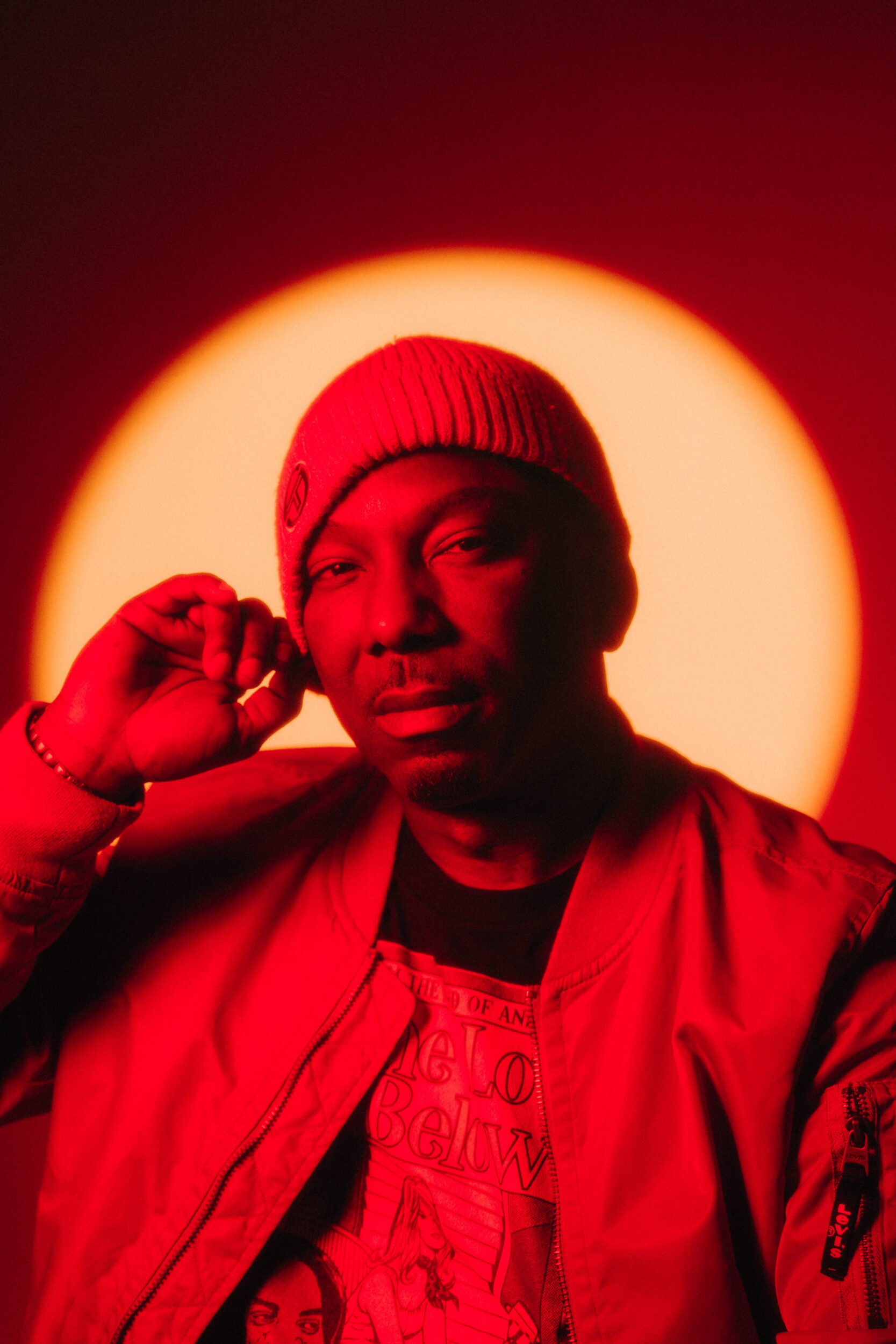
For more than three decades, Ras Kass has occupied a singular space in Hip Hop — uncompromising, intellectually sharp, and unapologetically principled. Emerging from the West Coast at a time when lyricism and ideology were often pushed to the margins, Ras Kass built a legacy rooted in dense bars, historical awareness, and fearless critique. His work has consistently challenged listeners to think deeper, question narratives, and engage with Hip Hop as a platform for truth and resistance.
The Hip Hop Museum caught up with Ras Kass to discuss his album Rassassination, how songs like “Interview With A Vampire” would fare today, the place for diss tracks in Hip Hop and so much more!
Adam Aziz: I wanted to start by asking you about your Rassassination album. It isn’t on streaming, but it is my favorite Ras Kass album. How do you feel about that album?
Ras Kass: Here’s the rub, man. I think Rassassination and Soul On Ice are the same album. They show people that perception is reality. There’s a certain recipe to those albums, like cooking something.
I’ll usually do at least four records where it’s really MC records because I’m an MC and I want other MCs to say the songs are dope.
I’m from the West Coast, so there are going to be two or three records where I focus on home. I’m a dude who goes to the club and bar, so there’s going to be two more club records. And then there will be what I’ll call conceptual songs.
“Interview With A Vampire” was on Rassassination and “Nature of the Threat” was on Soul On Ice.
AA: And then talk to me about “It Is What It Is” off Rassassination. It’s one of my favorite Ras Kass records, but it was obviously more of a commercial record.
RK: It’s a very personal record to me. I remember making the record. I was crying while making it. I wrote it for my mother. I’m telling her it is what it is. There was some financial stuff going on with my mom at the time, and there was a lot of stress on me to help provide. I was also feeling the responsibilities of being a young father. I finished the record and gave it to her, and it was cathartic.
AA: How do you think records like “Interview With A Vampire” and “Nature of the Threat” would have been received in the TikTok era?
RK: I’ve had people say that to me, that if I dropped them now with some crazy visuals, they would do really well. Guys like Joyner Lucas have done some cool conceptual things like that that go viral. I’ve always thought it would be cool to shoot retro videos for songs off the albums that weren’t singles and release them.
AA: What was it like coming up in the west coast when you did when supreme lyricism wasn’t exactly what people were checking for from the west coast?
RK: Rappers didn’t necessarily like me because rap is a competitive sport, and everybody wants to be number one. And some people who are actually number one may not be as skilled as other MCs. I always had great relationships with producers. Producers loved me. I was a rapper’s nightmare, especially if you’re the gold or platinum guy who has secured their position. People don’t like competition.
I felt like I was walking into the community of Hip Hop. I’m a fan first. I wanted a cassette and a vinyl record with my face and voice on them so I could bring them to my mother. That was the first thing I did with that vinyl because she made sacrifices for me. She facilitated helping me make my dreams come true. I also wanted the people I look up to, like Big Daddy Kane, Twista, and Mad Skillz, to say you’re part of this community, and you’re pretty good, kid. Those were my goals. I was never the guy who said they wanted to be triple platinum and a superstar.
I’m more of a purist. Some artists like that have pulled off commercial success, like Outkast and LL Cool J, but everybody’s recipe is a little bit different.
AA: I was talking to Tash awhile ago and mentioned to him that he seemed like he always had respect of the east coast and I feel like you did as well. Why do you think that is?
RK: Kid Capri brought me out to the Bronx before I had a record deal and I stayed with Kid. He was like, “you’re from the Bronx” and I’m like, “no, I’m not, I’m not from here. I’m from LA.”
The Museum is in the Bronx, as it should be. Even though New York is competitive, there is an honest streak in a New Yorker to say he can rap, though. It’s like Eminem. You can’t take anything from Eminem. You can’t say he’s not good on the mic. That’s why I think people like me, Tash, and Kurupt, once we got on a song or on the mic, it’s undeniable. You can’t say we aren’t dope.
That’s what I appreciate about New York, they’re competitive but smart enough to know when something is dope.
AA: You’ve made some incredible diss records over the years, one of them being “Hush Little Baby” directed towards The Game. What do you think the place is in Hip Hop today, or diss records and battles?
RK: The most recent battle you had three of some of the most incredible MCs – J. Cole, Drake, and Kendrick Lamar. They were all going at it. It was all over social media and on the news. It was good for the culture. It didn’t showcase who had a hit single; it was a competition. That’s why we watched the World Series. That’s why we watch the playoffs.
Kendrick put on a brutal showcase across multiple record types. It was great for the culture. And the coolest thing was, it didn’t get physical. I think the lawsuit stuff made Drake look like a sore loser. Sometimes you gotta say, bro got me this time, but I’ll be back. You can’t compete by saying, “I want to be tied; you want to win.” And that’s what they went for.
AA: Do you think young kids today who are into Hip Hop care about lyricism?
RK: I think some do. Most people are beat-driven. I’m lyric-driven. KRS-One inspires me. I remember people would complain about Nas’ production, and I would be like, yeah, but do you hear what Nas is saying? I don’t care if he’s rapping over crickets.
I remember I was in Australia, and I went out to a club the first night, and they were playing Suga Free. I was in Adelaide, Australia, and I’m like, I don’t hear this on the radio in LA. I remember meeting some girls in their early 20s, and they were like, “we like bars.” I’m thinking, that’s refreshing.
AA: Why do you think it’s important that Hip Hop has its own physical Museum space
RK: Because if we don’t document it, then other people come in who may not have the same care. I don’t mean any disrespect, but sometimes a publication like Billboard will come in and have a top 50 MCs list, and they’ll put Sexxy Red ahead of KRS-One or some stuff like that. When you have a really big platform, you’re influencing people’s perceptions and documenting the culture, and it’s not accurate, and that’s unfair. That’s wrong to do that. I’m not qualified to tell you who the best rock groups are because that’s not my expertise.
If The Hip Hop Museum weren’t in the Bronx, there’d be a disconnect because that wouldn’t make any sense.
Follow Ras Kass on Instagram.