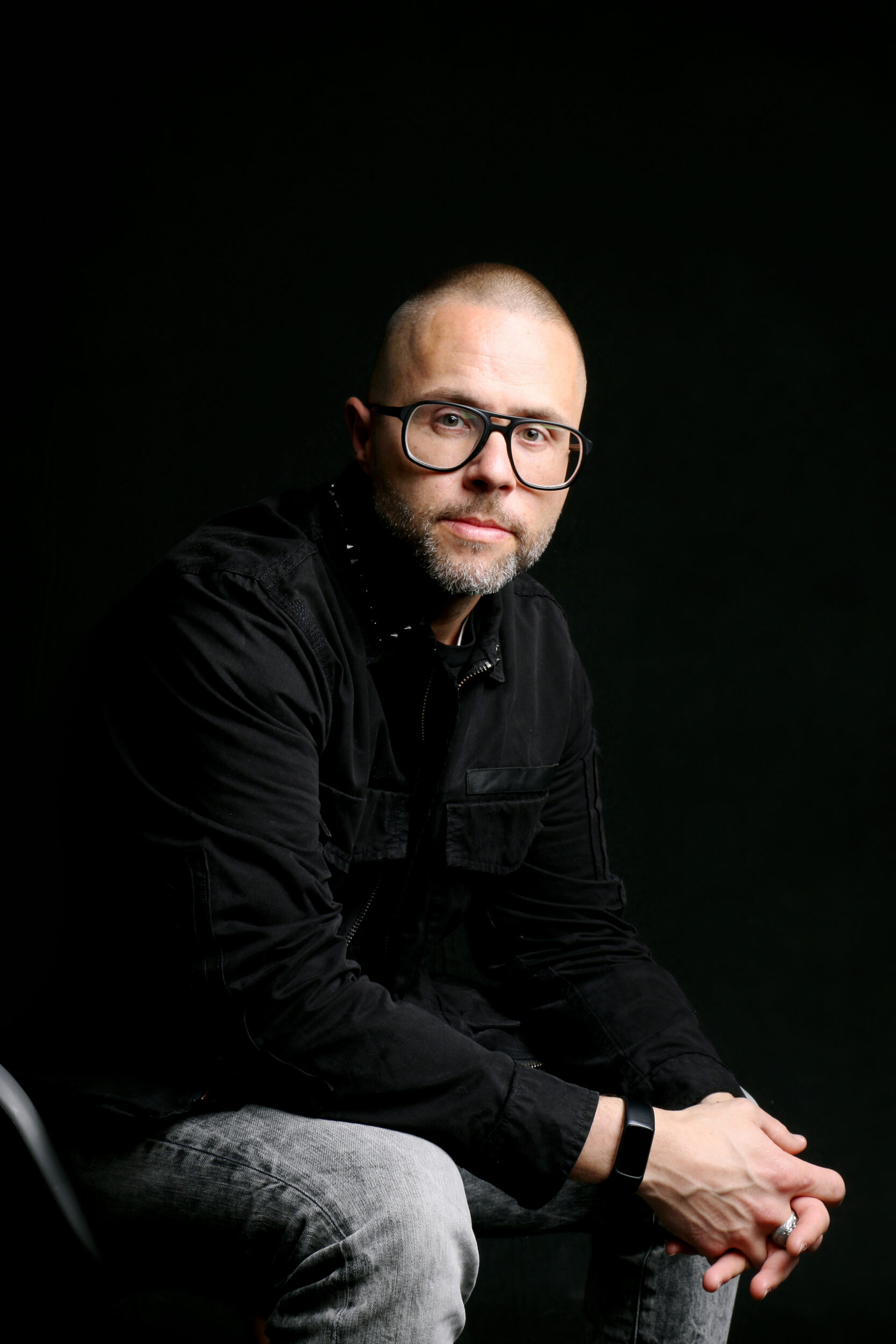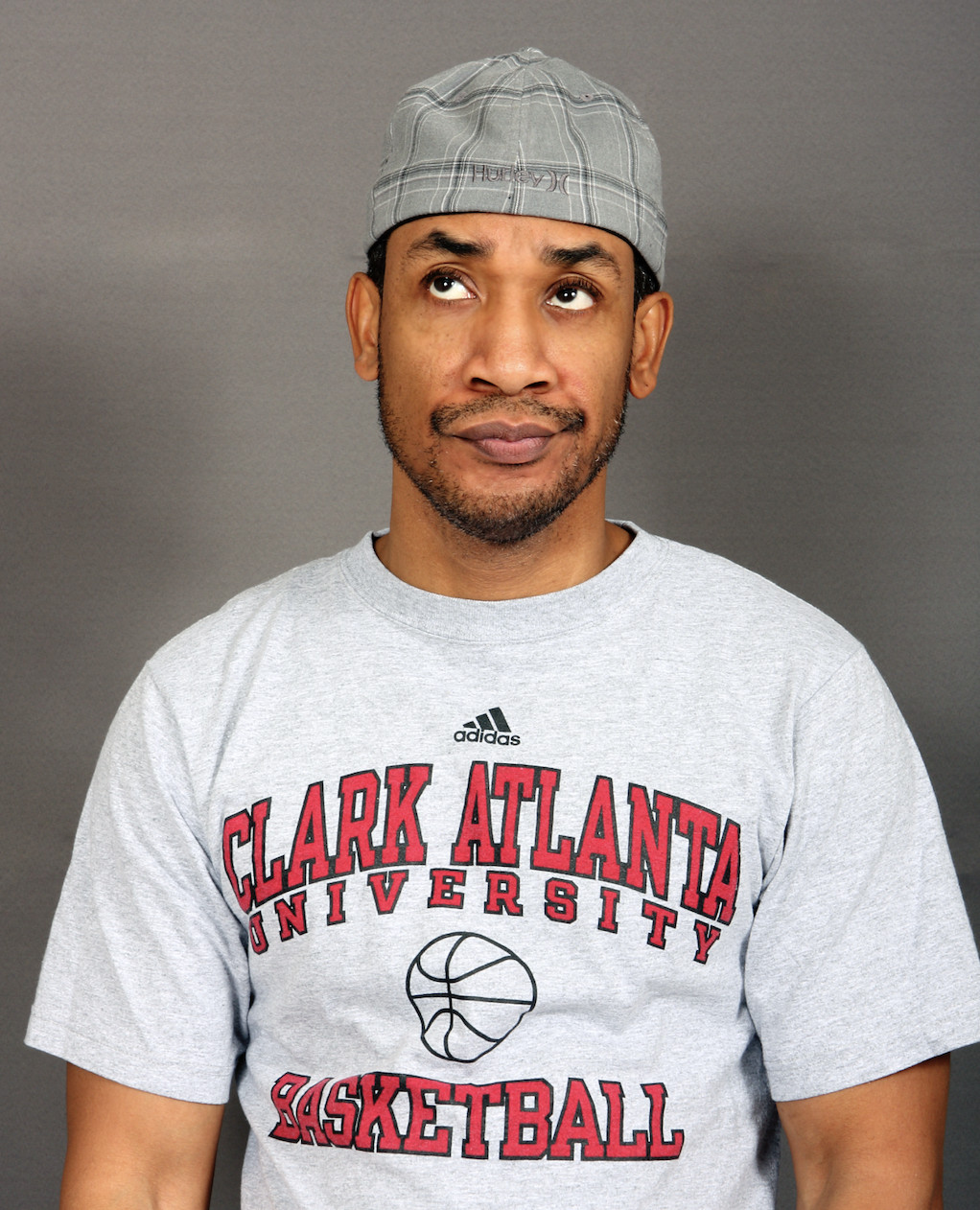
Widely considered the “mad scientist” of Hip Hop production, Prince Paul remains a singular figure whose influence is woven into the very fabric of the genre’s alternative DNA. From his early days with Stetsasonic to masterminding the psychedelic, sample-heavy landscape of De La Soul’s ‘3 Feet High and Rising,’ Paul redefined what a rap record could sound like by introducing the concept of the “Hip Hop skit” and layering obscure, non-musical samples that ranged from comedy records to French language lessons.
Decades later, his career remains a testament to the power of “staying weird,” as he transitioned seamlessly from the dark, horrorcore textures of Gravediggaz to the sophisticated, cinematic storytelling of ‘A Prince Among Thieves’ and the genre-bending collaborations of Handsome Boy Modeling School.
The Hip Hop Museum caught up with the legendary Prince Paul to talk about his lifetime achievement award from Roland, creating Gravediggaz, whether or not Hip Hop has lost its humor, and much more.
Adam Aziz: You were recently presented with a Lifetime Achievement Award by Roland. How does it feel to get recognition like that while you’re still active in Hip Hop?
Prince Paul: I mean, I was honored, flattered and totally surprised because, you know, I’m not the shiny name. I’m not the name everybody goes to when naming Hip Hop producers. I could name five or ten other producers that people would go to first. And then there’s me. People know a song and are reminded of it.
For them to pick me out and say, “hey, we want to give you this award and recognize your achievements and your work.” And I’m like, what me, I’m like, are you sure you got the right person? Roland and the staff have been nothing but nice. It makes me feel like I’m Cinderella—the slipper fit.
AA: I think you’re being too modest about your accomplishments.
PP: I’m the producer that people will say, “you’re so underrated.” And I’m like, I’m just glad to be rated. I’ve been making records since ‘85. I joined Stetsasonic in ‘83/’84 when I was still in high school. It’s been a long time, so I deserve that award.
AA: You are one of the very few people who have been around for all eras of Hip Hop. How difficult was it for you to shift and evolve over the years through the different eras?
PP: I love music in general. Hip Hop is a little bit of everything. And you know just as much as soul music evolved, right? You had Funk in the 70s, then Disco, then Hip Hop, and then you know, club and freestyle. You find the things you like in those genres.
I’ll be honest. Nowadays, I’m a little less inspired, but I’m starting to go through the weeds and find things I’m like, yo, this is really, really dope.
AA: Who are some of those artists you’re digging these days?
PP: I think Mick Jenkins is really dope. And if you want to go back some years, the whole Odd Future movement. Earl Sweatshirt’s first project. I keep my ears open. I’m familiar with the Ice Spice’s. My son is the DJ for Lil’ Uzi Vert.
AA: One of my top five Hip Hop albums of all-time is Gravediggaz ‘6 Feet Deep’, a group you were part of. Did you guys go into that album planning to make this wild, horrorcore project, or did that evolve as you started working on it?

PP: You’ve got to keep in mind this was the early ‘90s. This is pre-Wu-Tang. RZA wasn’t RZA yet. He was still Prince Rakeem. Frukwan was just off of Stetsasonic. Poetic was just off Tommy Boy. It was a dark time. I was coming off of having my label, Dew Doo Man Records, with Russell Simmons. I was making dark, depressing music, and I called all the guys up and said, “come to my house. I’ve got some music I want to play for you.”
I thought we could put this group together of all these misfits, you know, the people that nobody wanted, and let’s make a group out of it.
I remember sitting in my basement studio and playing the music. And then RZA said, “yo, we should call ourselves the Gravediggaz.” And he was like I’m gonna call myself the Resurrector – RZA. He came up with the name in my house. And then Poetic is like I’m the Grim Reaper. Frukwan’s like I’m the Gatekeeper. And then I’m thinking that the Paul Bearer is too obvious. I was like, I’ll be the Undertaker since I’m putting everything together. And so it matched the music and the vibe. It was actually resurrecting our careers. That’s what it really was. It wasn’t like, here comes Dracula or anything. That was the idea.
AA: My favorite record off that album is “Bang Your Head.” What’s yours?
PP: Every record is something different and special for me. It might be “Trippin’.” It might be “Graveyard Chamber.” It depends on my mood. “Bang Your Head” is good when you want to wild out. And then “Diary of a Madman”, the complexity of putting that together.
AA: Touching on “Diary of a Madman” for a moment. Talk to me about the complexity of putting that together. The song plays out like a movie. Were you in the studio directing all the MCs as if you were putting together a movie?
PP: Know what’s crazy? I was talking to Shabazz, who is the first MC on that song. We were talking about making that record and the beat. I have to tell you about the true origins of that beat. People think RZA made that, but he didn’t. He had his boy named RNS, who had the samples, and I took the samples from RNS.
Shabazz came in and dropped the lyrics that made everybody say, “Oh my God.” He wrote it right there on the spot. On my own time, I took a DAT Machine and, with a script, just went to everyone, telling them to say certain lines. Then I pieced it together line by line.
These days, kids can put things into the computer and put something together in no time, but I did this with samplers, listening and timing. That was an intense album.
AA: The humor and skits you brought to De La albums are iconic. Do you think Hip Hop has lost its humor?
PP: I’ll start with the skit part. When I first made skits for ‘3 Feet High and Rising’, I hadn’t heard that in Hip Hop before. So I was like, OK, I’m going to make this thing the glue and make the album make sense. This is a zany album, and I want people to know all the individual members of the group, so that was the concept.
I brought a lot of my personality into it, just being silly. I’m a kid, and I’m pushing 60, but I’m still a kid at heart. I’m just trying to find the silliest things.
As far as nowadays and where the humor has gone, people take themselves too seriously in a lot of ways. And you know, especially in Hip Hop, they take themselves so seriously that in some weird way it’s funny.
It’s like an overdone version of themselves. Like, I’m gonna be the super drug dealer. I’m gonna be the super drug taker. And I look at it, and I’m like, that’s really funny because it’s such an exaggeration.
AA: Is there a project you put out that you feel is underrated or didn’t get the shine it deserved?
PP: I put out a project called ‘Politics of the Business.’ I was recently approached to find unreleased records because they want to re-release the album.
I think the project flew over a lot of people’s heads. It was a sarcastic record poking fun at the music business, and I think a lot of people took it as if I was actually trying to make commercial records. Like, there’s one song I did that I just found one of the mixes. Yo, it sounds clearly like something that would have come out of Bad Boy.
When I was at Tommy Boy, and I did ‘Prince Among Thieves’ and other records, I remember they came to me and said the records you make are too smart. And the President said to me, “albums don’t sell, singles sell.” So I made ‘Politics of the Business’ out of spite. Like watch me, I’m going to make an album full of singles.
AA: Why do you think it’s important that Hip Hop has its own physical Museum space?
PP: I mean, so that it doesn’t get lost. I think, especially now, and you look online, it’s such revisionist history. People can make things up. Like, oh, the President of the United States was in the studio when they made this. I’m like, no, he wasn’t. There needs to be a place where people can go to find history that’s legit and curated.
The Museum is important. It gives it a place, because you know, all of us, us older hip hoppers who are going to be long gone, and it has to be something that we can, you know, that the kids can point to and go, OK, this is legitimate and it’s needed.
Follow Prince Paul on Instagram.