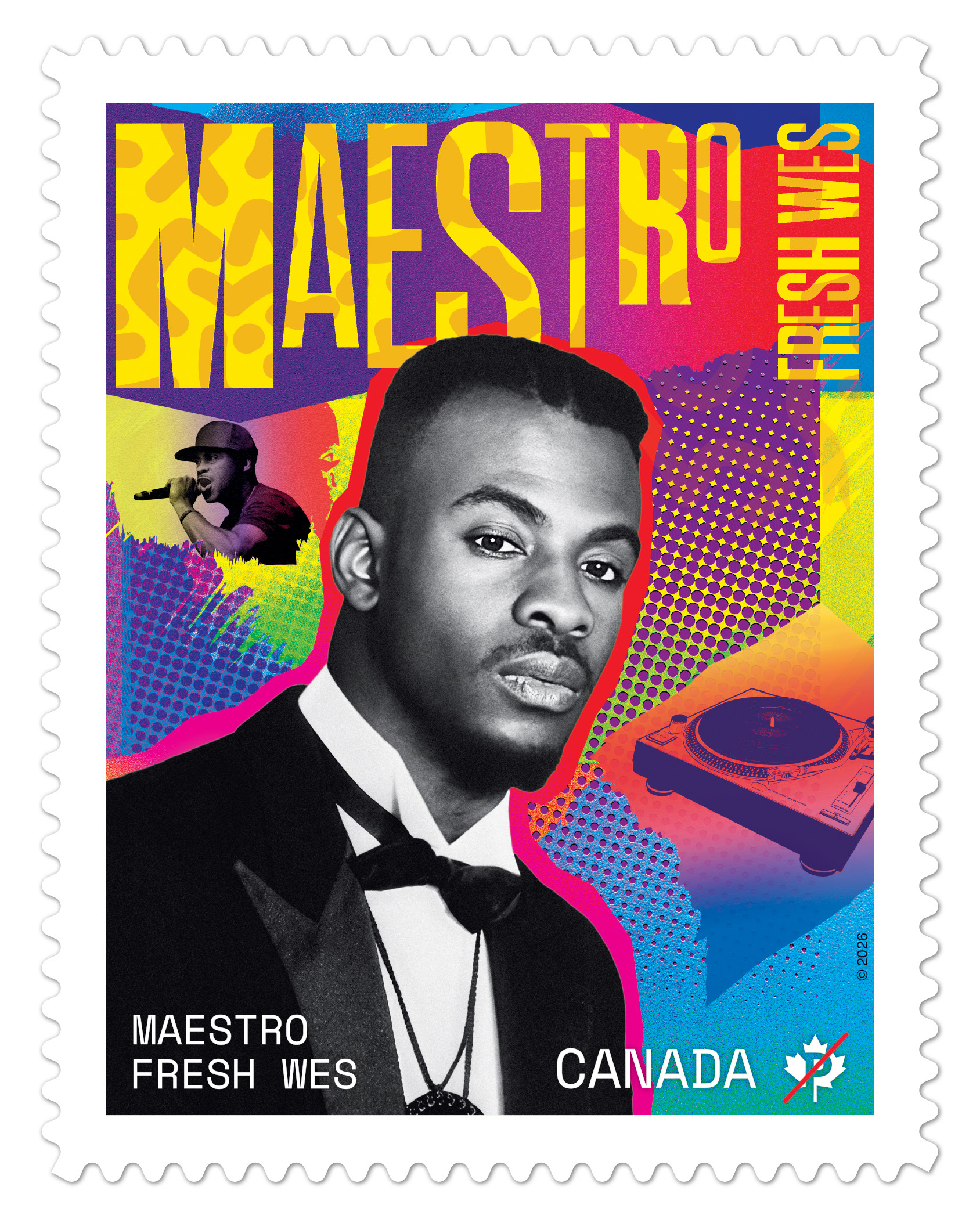
To celebrate Black History Month, Canada Post has launched a vibrant new stamp collection, marking the first time the Crown Corporation has ever featured Hip Hop artists.
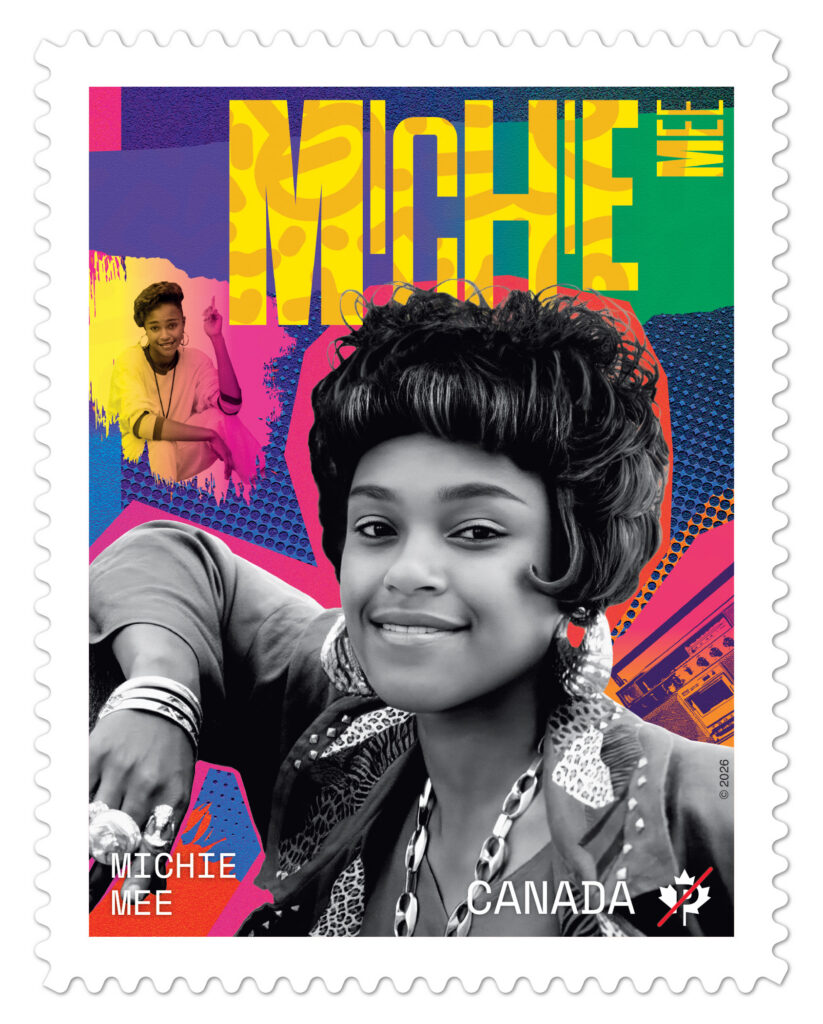
This set pays tribute to three foundational pillars of the genre: Maestro Fresh Wes, whose 1989 smash “Let Your Backbone Slide” broke mainstream barriers; Michie Mee, the “godmother of Canadian rap”, and the Montreal-based trio Muzion, who enriched the culture with their multilingual blend of French, English, and Haitian Creole.
Designed with a nostalgic aesthetic, the stamps utilize innovative fluorescent inks that glow under black light and metallic silver duotone portraits, mirroring the bold, rhythmic energy of the music they represent.
By immortalizing these trailblazers on postage, the collection recognizes Hip Hop not just as a musical genre, but as a vital part of the Canadian cultural fabric that has empowered marginalized voices and defined the country’s northern sound.
The Hip Hop Museum caught up with Eli Yarhi, Manager of Stamp Development at Canada Post, to talk about the stamps, why this Black History Month was the moment to recognize Hip Hop, how the designs came together, and more!
Adam Aziz: Can you introduce yourself and tell us what you do at Canada Post?
Eli Yarhi: My name is Eli Yarhi, and I am the Manager of Stamp Development at Canada Post.
AA: Can you talk a bit about your role and what it is that you do?
EY: Yeah, it’s not an everyday job. I’m on the Research & Development side of things. I help identify ideas, bring them forward, flesh them out, and handle the research and storytelling. Quite often, I act as a liaison between subject matter experts. Sometimes I work between the honorees and the design side to make sure everyone’s happy with how things are depicted. But then also making sure that what’s on the stamp is accurate. I mean, that’s more relevant to something like putting a butterfly on a stamp. But if we’re putting Hip Hop on a stamp, I’m kind of the liaison between the cultural experts and the design team, to make sure everything is either historically accurate or, let’s say, relevant or sensitive to the culture.
AA: Why did it take so long for Canada Post to recognize Hip Hop on a stamp? The culture has been around for over 50 years now.
EY: There’s a whole lot of boring reasons why it takes so long. A lot of those are, you know, Canada Post only started putting living people on stamps around the early 2000s. Oscar Peterson was the first living person on a Canadian stamp.
Over the years, we’ve covered Blues, Jazz, and R&B artists, so I think it was a natural progression towards Hip Hop.
Typically, we wait until artists have reached emeritus status. You know their legacy is cemented, and then we stamp it.
AA: Why was this Black History Month in 2026 the right time to do this?
EY: It takes a long time to do a stamp. We typically spend anywhere from 18 months to 2 years in development. A lot of that is for technical reasons. We would have started thinking about this just before Hip Hop’s 50th anniversary in the US, knowing that the genre and culture really started there, and that it came a little later to us in Canada. It was around that time when we thought, OK, we know we want to do Hip Hop, but how are we going to do it? How are we going to commemorate this genre, this movement? We do a Black History Month stamp every year. This is an ongoing series. So we thought, OK, for 2026, which was the next opening we had in the program, let’s do Hip Hop.
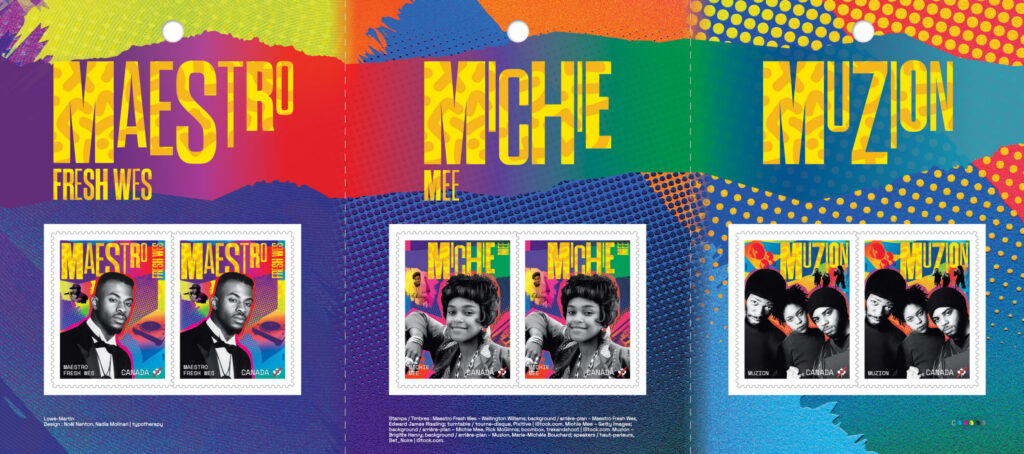
AA: I assume the hardest part of this process is selecting the artists. How did you land on Maestro Fresh Wes, Michie Mee, and Muzion?
EY: What we wanted to do is start as close to the roots of the story as we could. And we knew that we wanted to be regionally diverse. We knew we wanted men and women on there and English and French representation, so we really started from there.
We worked with a variety of consultants and experts, where we got their opinion on who to spotlight, where to start, etc.
We unveiled the stamps at The Concert Hall in Toronto last month. Ron Nelson was the host. He stood up and said, “we are at The Concert Hall, where it all started for the genre in Canada, and this group of honorees, Maestro Fresh Wes, Michie Mee, and Muzion, feels right.” He gave his stamp of approval, and that’s someone who carries the culture’s history.
AA: What was the reaction of the artists when they found out?
EY: They were all surprised, and I always say this, but it’s the best day in my job when we get to put that letter out and then make that call to follow up and say, hey, look, this is actually real, like it’s not a scam or something.
To go back to your other question for a second, what I like about the stamps is that, hopefully, they open the door to recognizing other artists in the years to come.
AA: I’m not sure if you’re familiar with the line “most of my heroes don’t appear on no stamps” from Public Enemy’s “Fight The Power,” but how much did the history and the culture of Hip Hop play into this project?
EY: That was everything. There’s even a line in the booklet that if you’re a fan of Canadian Hip Hop, you’ll know it right away. It said, “when Hip Hop arrived in Canada, it took on a new identity, thanks in part to the trailblazing MCs who reimagined the genre and gave it a northern touch.” The “Northern Touch” is a nod to the iconic record from Kardinal Offishall, Choclair, Thrust, Checkmate, and Rascalz.
AA: How did you land on the design of the stamps? It harkens back to the late 80s, early 90s Hip Hop for me.
EY: I worked with the designers directly on this. A Toronto-based company called typotherapy designed the stamps. The winning concept came when we put out a call for a design firm. Their influences were early concert posters and early Hip Hop magazines like VIBE and The Source.
It’s also pretty cool that, if you put the stamps under a black light, the neon ink pops like crazy.
AA: I know you just recently learned about The Hip Hop Museum being built in the Bronx. You were very close to Hip Hop culture throughout this project. Why do you think it’s important that Hip Hop has its own physical Museum space?
EY: I think that’s incredible. That’s the fifth element, you know, a building in structural form, this is where the history resides. That’s such an important thing.
I love that the approach is international. It opens the door to taking in the history of the genre, which is now global, and to the many cool contributions different countries have made. It’s also exciting to know that the stamps may have a special home inside the Museum.
For more information on the Black History Month stamps celebrating early Hip Hop culture in Canada, click here.