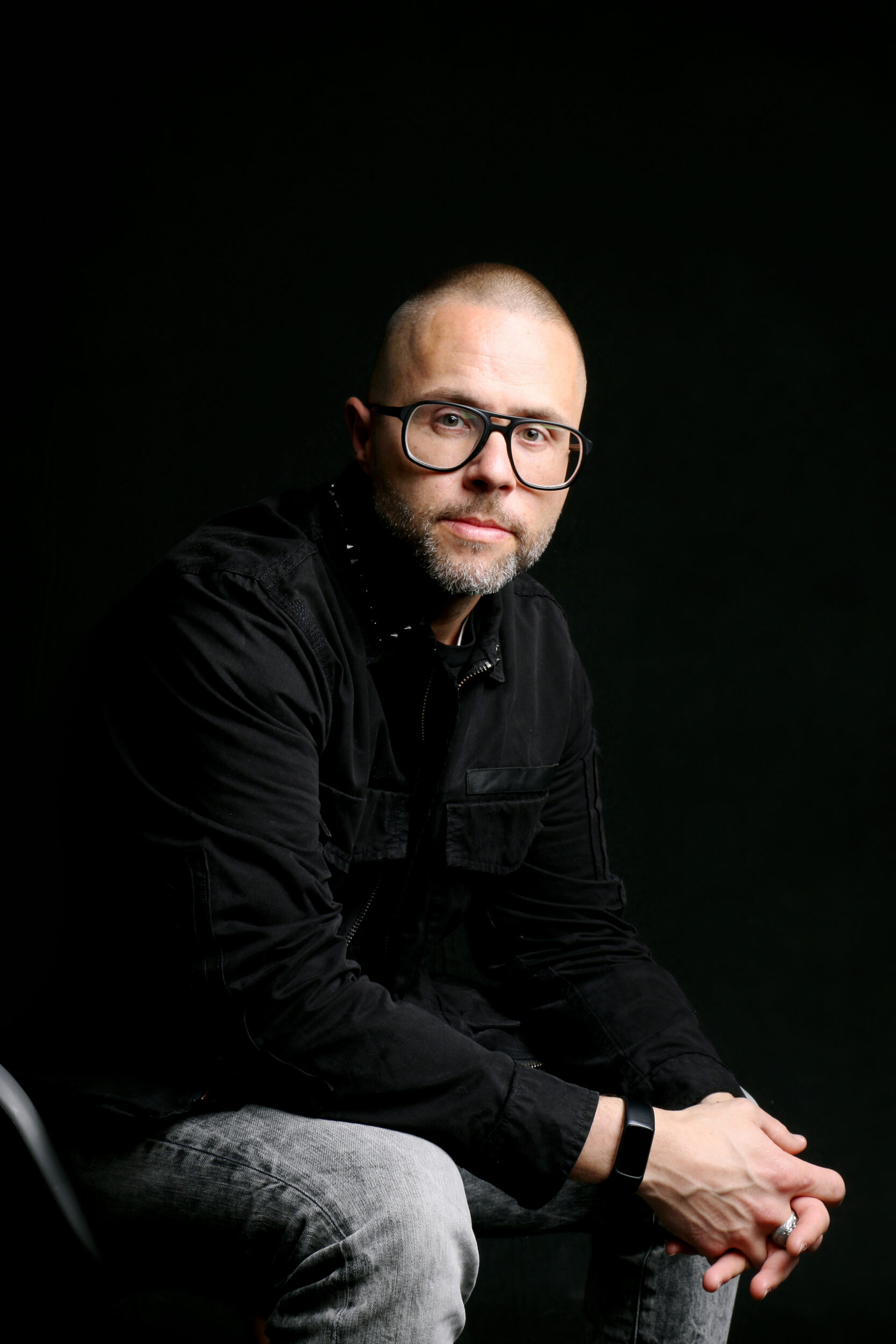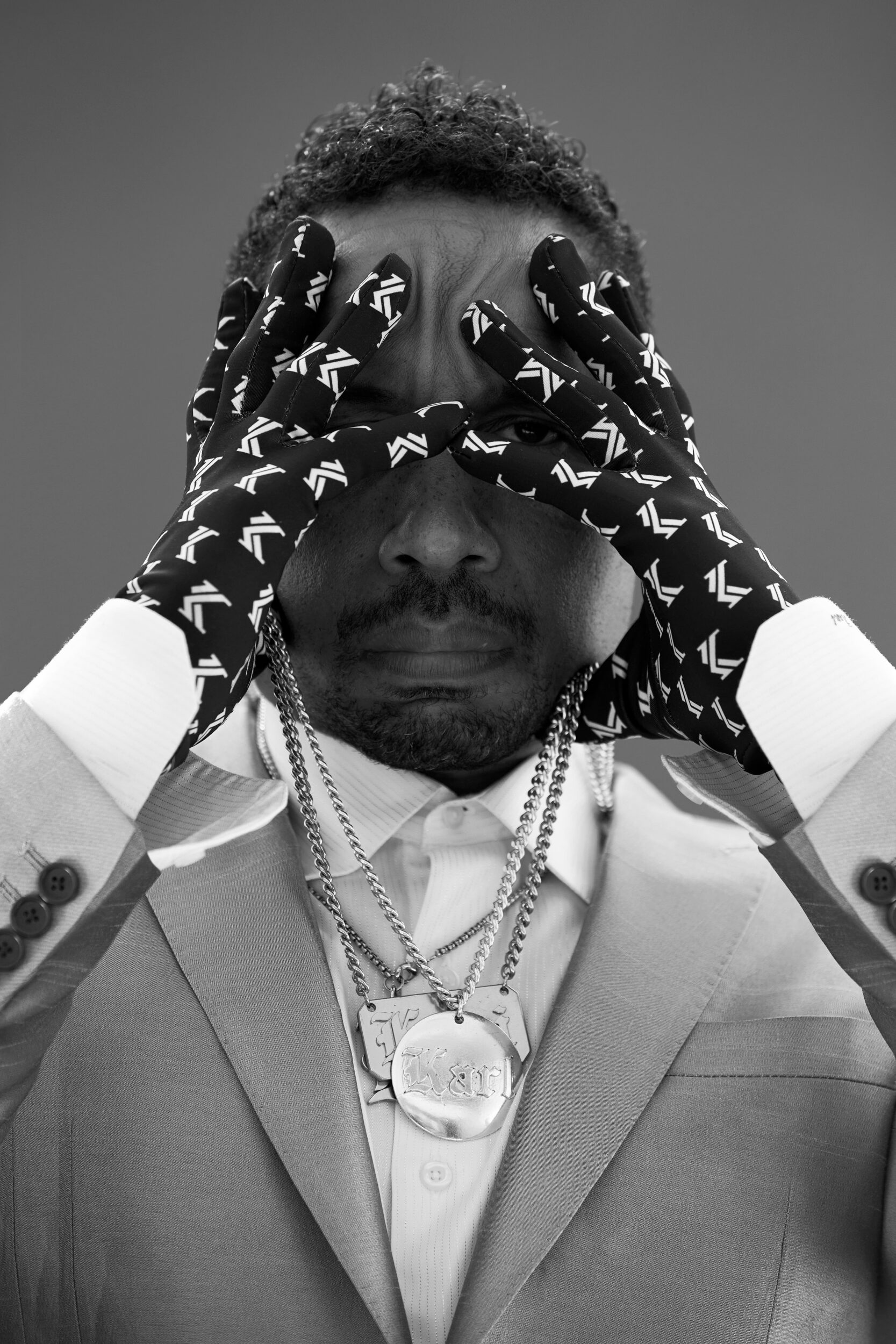
Widely recognized as the “Godfather of Urban Streetwear,” Karl Kani revolutionized the fashion industry in the late 1980s and 1990s by bridging the gap between Hip Hop culture and mainstream fashion. Growing up in Brooklyn, Kani began designing custom apparel at a young age to fill a void in the market for authentic street style.
He pioneered essential urban aesthetics, such as introducing purpose-built baggy jeans tailored to Hip Hop style, and built his namesake brand into an empire endorsed by icons like Tupac Shakur, The Notorious B.I.G., Aaliyah, and Michael Jackson.
Over more than three decades, Kani’s trailblazing vision transformed streetwear from a niche subculture into a multi-billion-dollar global phenomenon, establishing a lasting legacy that continues to influence contemporary fashion.
The Hip Hop Museum caught up with Karl Kani to discuss the return of baggy clothing and style, the brand’s early years, how Hip Hop fashion has changed, and more.
Adam Aziz: Many classic Hip Hop and streetwear brands have either folded or pivoted away from the culture, yet yours is still thriving. What’s been the secret to your longevity and sustained success?
Karl Kani: Karl Kani, the brand itself, is the originator of streetwear fashion. And I feel very strongly that a lot of those brands weren’t built like us. Like, our vision, our determination, what we started, and our will to win, is undefeated. It’s like, when you start something, the last thing you want to do is to be one of those things that you started something inspirational and then you’d be forgotten about years later, and someone else tells your story from the beginning.
I’ve always asked myself that question: “Can I?” And the reason I call myself Kani and call the brand Karl Kani is that the word means everything. That is a question of reflection, and every day we have to answer that question: “Yes, I can.” So that’s one of the things with Karl Kani, like where we built from and the doors that have been opened because of the success of our brand and just the integration of Hip Hop and fashion. The connection we had… like, Hip Hop needed a clothing brand, and Karl Kani needed Hip Hop, so the marriage just worked well from the beginning.?
AA: Europe has always had a deep loyalty to classic Hip Hop culture and fashion. How important has the European market been to Karl Kani’s long-term growth?
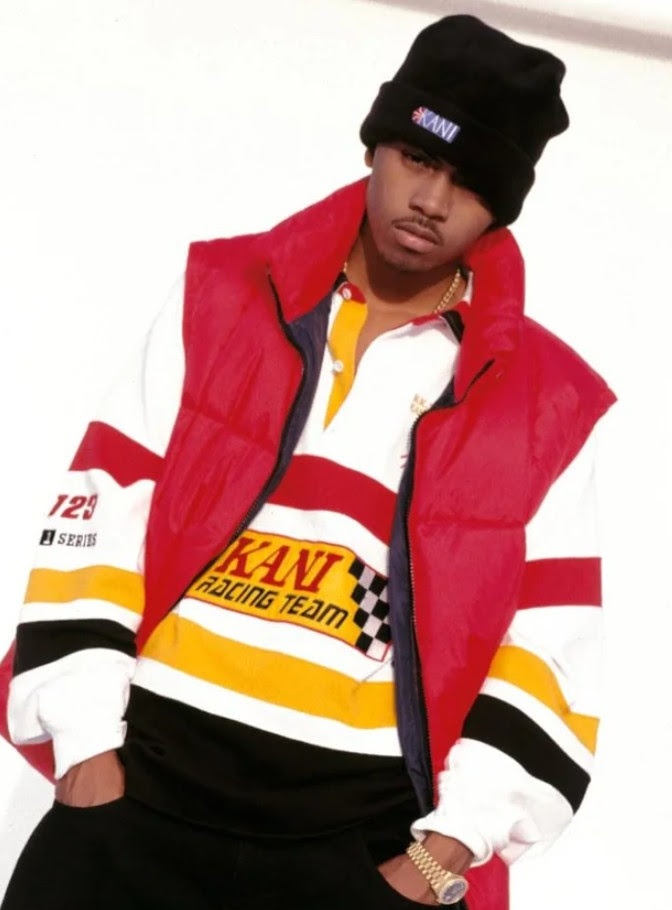
KK: Yeah. So, here’s the thing with Europe, man. Like, the Kani brand today is more popular internationally than it is here in the United States. We have 10 flagship stores in Japan, and we’re distributed in 20 foreign countries. Snipes is our European partner. We’ve been in business with Snipes since 1998, when they opened the first Snipes store—me and the former owner, Sven.
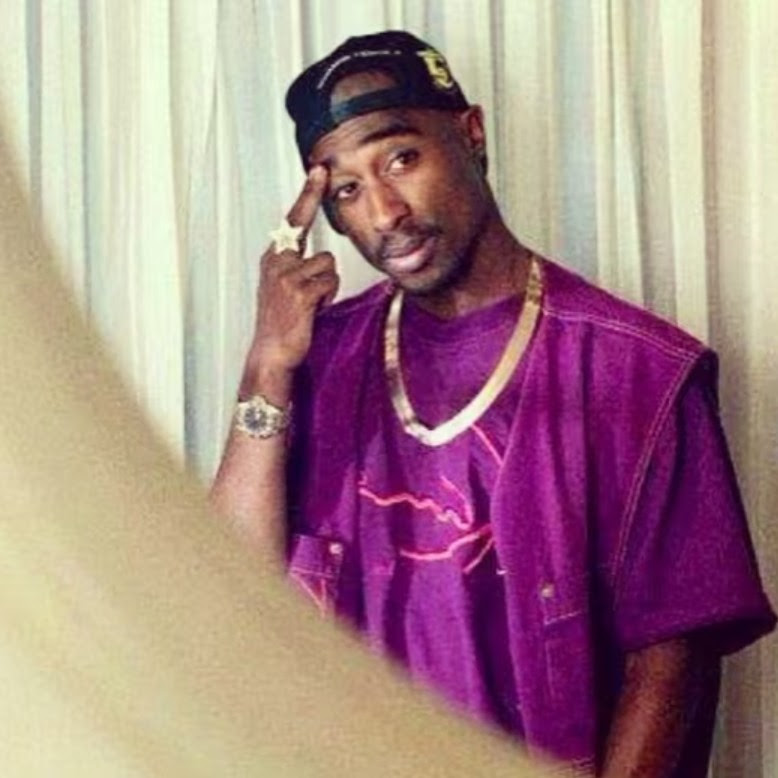
What brought us together was his love of Tupac. Tupac was an integral part of wearing Karl Kani back in the day, and Tupac was worshiped like a god in Europe to a lot of Hip Hop heads, you know what I mean? He’s the first rebellious rapper they all worshiped. And what did he wear? He wore Kani, and they all understood it wasn’t a paid endorsement; it was just real, authentic him wearing the brand. And not only that, just the campaigns of Biggie, Tupac, Nas… these guys were what these kids looked up to in terms of fashion and streetwear, and the clothing spoke to that audience, and we embraced the European culture. What I realized in Europe and in fashion is that as Hip Hop grew, our clothing grew. Like, when Hip Hop was in Italy, Karl Kani was there. When Hip Hop was in Rome, Karl Kani was there. So anywhere there was Hip Hop, our clothing spoke to that consumer base.
AA: Looking back at a 1992 LA Times piece, I noticed your gear was priced at a premium—like $75 for pants. How did you land on that pricing model back then?
KK: I remember that back then, one of the most popular sweatshirt brands was Champion. Everyone was wearing Champion fleece back then, right? And when we came out with Karl Kani fleece, we wanted bulletproof fleece. We found the heaviest, thickest fleece out there—best quality we could find. It was a company up in Boston called Malden Mills. They knitted the fabrics right here in the USA. Best fabrics. And our sweatshirts were $90 to $110.
But the thing was, we knew that the only way we could compete against Tommy, Ralph, Calvin, all those guys was if our product was better than theirs. There was no other option because we had to convince the consumer and give them enough reasons why to make a change. Our quality was better, our fabrics were better, and our fit—we had our own unique, oversized fit that they didn’t have either. But we knew quality was number one to the streets, and that’s what we focused on in the beginning.
AA: Why is baggy fashion resurging now? Is it pure nostalgia, or something else?
KK: It’s nostalgia. And you’ve got to think about this, right? So, baggy started when we started back in ’89. Baggy had a good run all through the ’90s and even into 2000; people were still rocking baggies, right?
Now, what I’ve realized in this business is it’s a generational thing. There’s always new generations of kids coming up. A kid will rock the same way maybe through junior high school through high school—he’ll rock the same type of look. After he’s out of high school, he doesn’t want to look like the high school kids anymore. He wants to feel like he’s moved on in life, right? He’s not going to dress like a high schooler anymore. So, because baggy had been around so long, all of a sudden you had a new generation coming up. And Lil Wayne was popular at the time, right? Lil Wayne was at the height of his career when he started wearing skinny jeans.
So, everybody wanted to wear skinny jeans. Like, “Yo, I could be cool and wear skinny jeans. I could get away with that.” All of a sudden, now that’s what started trending. You know, baggies had their way, and this younger generation probably didn’t want to look like their dad, you know what I mean? They wanted to be different. So that’s where the change came about.
AA: How did your experience in LA, and the distinct style differences between LA and New York, shift your direction for the brand?
KK: It’s a great question. You know, I did a podcast the other day with E.D.I. He is one of Tupac’s guys in the Outlawz. We were talking about me coming to LA back in the day, and he had no idea that when we came to LA, we lived right in South Central. We had a store at 4312 Crenshaw Boulevard, two blocks down from Nipsey Hussle’s store. We were actually living in the store.
I was telling him how much love we got from the LA side. The first famous rapper we met in LA was Ice-T. We met him the second night we were here on Hollywood Boulevard. He was with his wife at the time, Darlene. We ran into a gift shop, a souvenir shop, and bought one of those disposable cameras. We had to get a picture with him. So, we got a picture with Ice-T the first night we were here. He gave us love.
LA rappers, man, for some reason the culture was just real. I think they needed a new identity in terms of dressing, and Karl Kani clothing spoke to the look they were going for. You know, Snoop wore my stuff in his first video, “What’s My Name?”, and it kind of just started trending from there. And don’t forget about it, you know, Tupac was East Coast-West Coast, but he was very influential on people’s fashion and changing from Dickies into more fashionable-looking clothing.
AA: Did Karl Kani ever lean into product scarcity to drive demand, or was wide availability always core to the strategy?
KK: You know, with our brand back in the ’90s, you heard some of the streetwear brands saying they did 300 million a year, 400 million a year. We never did those types of numbers yearly. That wasn’t our thing, and we didn’t want to do those numbers. We knew you could only put a certain amount of product out there because once the cool kids stop wanting your stuff, it’s the hardest thing to rebuild your brand.
We were able to spread our business out and build an international business and a Japanese business, so we didn’t have to worry about selling tons of product here in the United States at the same time. And the industry shifted. When the industry went straight skinny jeans, it pushed us out of a lot of the big-box retailers we were selling to at the time. There wasn’t any direct-to-consumer marketing, and there was no online shopping at the time, so we had to find other avenues to get our brand going.
AA: In the past, iconic superstars like Tupac, Biggie, and Aaliyah built your brand organically. Today, with fewer mega-stars around, how has your strategy for partnering with artists shifted.
KK: I’ll tell you what’s happened nowadays. Everyone’s going back to the ’90s now, recreating the ’90s. They just did a tribute to Aaliyah at the Essence Festival a couple of weeks ago. It was Mya, Normani, 7even, and three other artists whose names I can’t remember. They did a whole tribute to Aaliyah, and they all wore vintage Kani on stage. We recreated a lot of the Aaliyah looks for that, which was amazing to see and experience. Like, right now Snoop is doing his biopic, so we’re doing the wardrobe for that. It’s amazing.
So, what is happening now with the brand is like, brands with history and a story are the ones that can make it because right now there’s no shortage of clothing out there. There’s no shortage of brands; there’s no shortage of anything. Everyone has a clothing brand. You can buy clothing anywhere you go. So now, it’s about storytelling and community that will really set you apart from other brands today.
AA: Where is Hip Hop fashion going?
KK: Hip Hop fashion to me is going worldwide. And to me, the looks are getting more boxy, more loose. What I love about it right now is it’s very versatile because people are mixing baggy and slim, slim and baggy, oversized. You could do an oversized bottom and a big top. So, I like the way it’s going right now. It’s very versatile. Logos are getting smaller. It’s going back to quality. Once you get rid of all the bells and whistles, only the quality of the fabric will really speak for itself. So, that’s where it’s going back to right now.
AA: Why do you think it’s important Hip Hop has its own physical Museum space?
KK: Because, man, this is culture. This is something that we built from the ground up, started with nothing. This is an idea, this thing called Hip Hop. So many people owe so much homage to Hip Hop. It’s created so many jobs and opportunities. It took kids that had a dream to get out of the hood and build empires for themselves. I mean, the fashion is what has gone worldwide. It’s internationally known. It means everything. This heritage has to be upheld because if we don’t tell and preserve this story, anyone could tell it, and it could be told totally differently from what it is today. You’ve got to preserve the originality of Hip Hop. And that’s why this museum is super important.
Follow Karl Kani on Instagram.