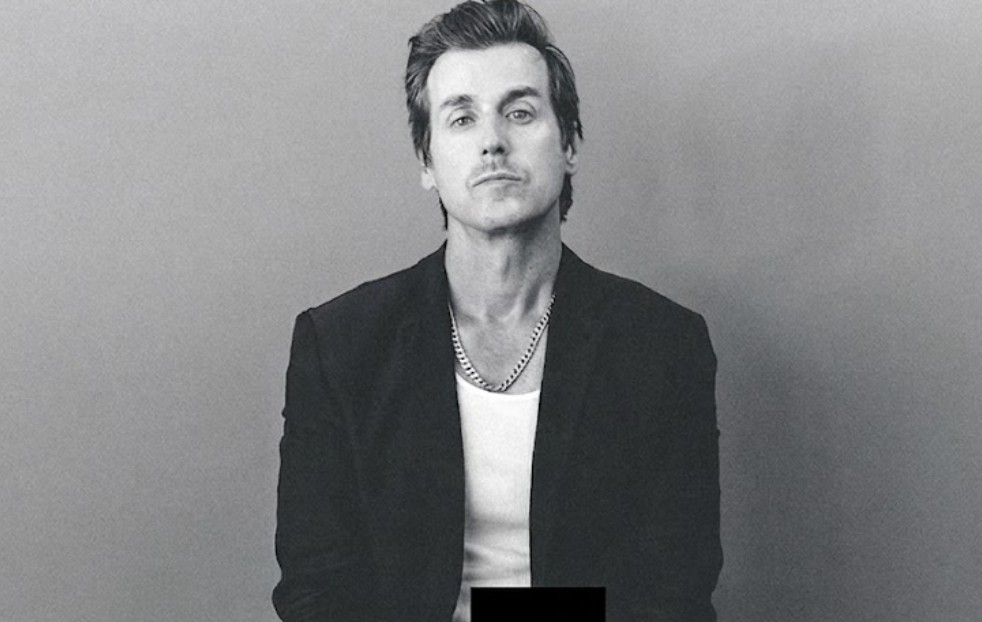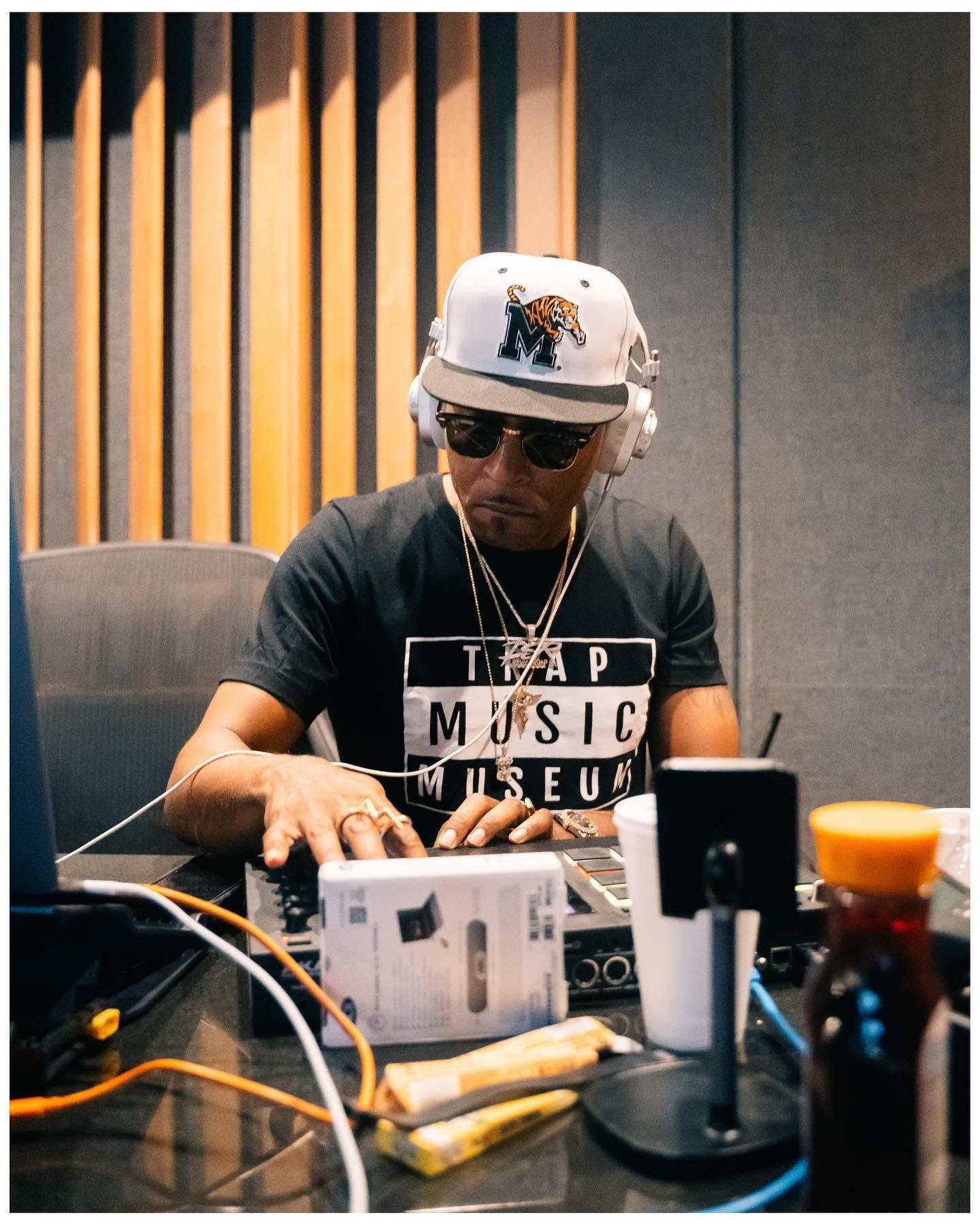
As the sonic architect behind Cypress Hill and the leader of the Soul Assassins collective, DJ Muggs fundamentally reshaped the landscape of Hip Hop production in the early 1990s. Renowned for his pioneering use of dusty, jazz-flecked loops, piercing horn samples, and a dark, psychedelic minimalism, he crafted a gritty, atmospheric aesthetic that became the blueprint for West Coast rap and heavily influenced the emerging East Coast boom-bap sound.
Beyond his multi-platinum success with Cypress Hill, Muggs proved his immense versatility by producing massive cross-genre hits like House of Pain’s “Jump Around” and Ice Cube’s “Check Yo Self,” establishing himself as a foundational figure whose eerie, subterranean beats continue to define underground Hip Hop’s sonic DNA.
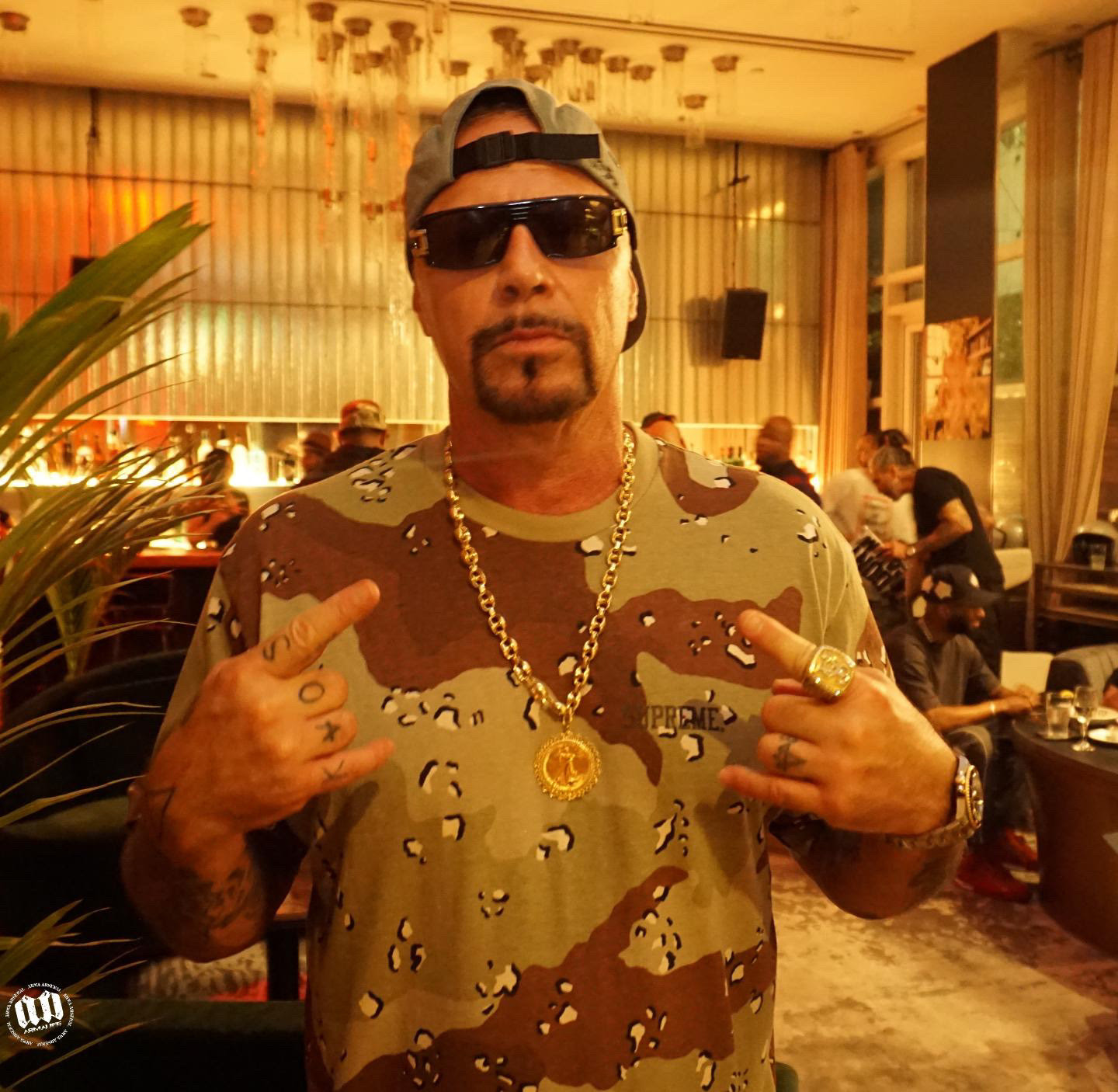
Hailing from the heart of South Central Los Angeles, T.F is a formidable force in the West Coast rap scene, widely recognized for his raw, uncompromising lyricism and vivid street storytelling.
Embodying his trademark “ErThangSkanless” ethos, T.F masterfully balances the grit of his upbringing with a sharp, highly technical pen.
Collectively, Muggs and T.F have come together for the album ‘Don’t Call Me Lucky’, a project that marries DJ Muggs’ signature, ominous boom-bap production with T.F’s razor-sharp, unfiltered West Coast street narratives.
The Hip Hop Museum caught up with Muggs and T.F. to talk about the new project, their working relationship, Cypress Hill, Muggs’ signature production sound, and much more.
Adam Aziz: Can you break down the title of the new album for me – where does ‘Don’t Call Me Lucky’ come from?
T.F: This wasn’t some overnight type sh*t, man. I’m 13 years in, and I’m just now getting started. It’s about staying down, hustling, grinding – the stuff people don’t see. All the behind-the-scenes, all the sleepless nights. So ‘Don’t Call Me Lucky’, there’s no luck involved with this. It’s all good work. Blood, sweat, and tears, man.
AA: How did you come to link up with Muggs?
T.F: We started off doing a couple of records. We did a few records early on. We met at a Roc Marciano pop-up at the Gallery Dept. some years back, and then we worked on a few records. We just started out, hanging though, man. Obviously, he’s a legend in the game. So, just being able to be around that and soak up game and absorb everything was already just top tier for me.
AA: What was the most important thing Muggs taught you?
T.F: Don’t get comfortable. Like, we’ll do a record, and I probably wouldn’t hear it for like another two, three weeks. So, not being able to hear that record kind of helps me, like, when you’re building an album, you might get kind of stuck in that sound. So not being able to hear these records as we went throughout the whole process—and at the time, we weren’t even working on an album. We’re just recording. But at the same time, you record to make something cohesive. So, not being able to hear these records and then hear it as a whole, like down the line, it’s like, damn, okay, dope. I need to step it up here. I might be hearing little things like, “Okay, I need to do this better.” My cadence, like even Muggs, he’ll tell me like, you know, say it like this or, you know, like the timing of certain deliveries and stuff like that. I’m just being a sponge, reciprocating and showing that I’m learning.
DJ Muggs: I prefer not to give music out, because I might change stuff or, you know, put an EQ that wasn’t on there before, and you start getting demo-itis, man. You’re like, man, I like the other ones. And then I’m just stuck. I can’t finish my work. You know what I mean? Sometimes I remix the songs, change the snares to make it better, and that’s one reason I don’t like to give sh*t out, man.
AA: I was talking to Billy Danze from M.O.P. recently and asked him this same question. Muggs, how do you think over the years, you’ve done so many different things, how have you been able to retain that kind of broad respect and even though you’ve had astronomical commercial success, that strong tie to the street and the underground remains? How have you struck that balance?
Muggs: I’m just passionate man and inspired. The hits happened on their own. I never went out of my way to make a hit. If you listen to our hits, there are no R&B singers on them. There are no chords, you know what I mean? They’re just the records we made that happened to do what they did. Man, I was blessed.
I’m just going to keep working, keep myself uncomfortable. I never look back. I don’t lean on what I did, man. When Kobe was here, he won the championship the year before, and his attitude was, “Last year was cool, but I’m here now.” You know what I mean? I’m always looking forward, man.
You walk into my house, you don’t even know I make music. There ain’t no gold records. There’s nothing in my house that shows you that I make music. There are artists like T.F, Roc Marciano, Alchemist, Boldy James, the Griselda family, and Action Bronson. All these motherf*ckers keep me inspired, man.
I’m at the place now where I don’t do this for accolades or money. I do this for me as an artist. And number two, hopefully, I inspire the next 12-year-old to want to do this sh*t and keep with the kind of music we like. Keep pushing it forward, man.
AA: Back in the day, you never shied away from different genres. Especially the blending of Hip Hop with rock, and you always innovated. We didn’t see as much of that commercialized back in the day, but now we see a ton of crossover, right? Tons of rap and country collabs. We see rock artists referencing Hip Hop as an influence. What barriers did you come up against back in the day when you were trying to do this creative stuff that just wasn’t really necessarily what was popping back then?
Muggs: Well, Hip Hop is the number one music in the world right now. So, everything, the way people talk, walk, dress, act, everything, they look to Hip Hop.
Back then, they were like, “Is it even gonna last? Is it a trend? Is it a fad?” You know what I mean? I grew up in rock and roll, but I was also inspired by the stuff Rick Rubin produced, which was rock-and-roll-driven, with the energy of LL Cool J, Run-D.M.C., the Beastie Boys, and Public Enemy. All that sh*t had rock-and-roll festival energy.
To me, Hip Hop is the urban punk rock. This is the urban rock and roll. You know what I mean? F*ck y’all. We don’t play by the rules. We don’t; we paint outside the lines. We march to our own beat. We do what the f*ck we want. We are anti-establishment. So that’s just kind of what this shit was for me, and it still is, man.
AA: “100 Dollar Bill” is one of my favorite tracks on the album, and T.F, it really highlights your strength as a pure lyricist. I’ve talked to artists like Ras Kass about this before, but it often feels like ‘true lyricism’ is traditionally and almost exclusively associated with the East Coast. Even when West Coast MCs drop undeniable verses—like B-Real on Outkast’s “Xplosion”—there seems to be a persistent struggle to get that same level of regional respect for the pen. Why do you think the West still faces that double standard when it comes to being recognized for pure lyricism?
T.F: I feel like it’s based on what’s the norm over here, you know what I’m saying? A lot of people tell me, ‘Oh, you sound like an East Coast artist.’ And I’m like, well, if you listen to what I’m saying, I’m talking about West Coast sh*t.
I just know how to rap. So, I feel like just being out of the norm is what the problem is because it’s like, you’re not used to hearing that sh*t but I grew up listening to a lot of East Coast music. Like, even with that record, “100 Dollar Bill,” when I first heard the beat, the first person I thought of was Prodigy. I’m like, damn, this sounds like some Prodigy-type sh*t.
Being on the West Coast, they want you to sound a certain way and you gotta look like this and, you know, don’t rap over these beats because it’s really not a lane over here for you. I heard all this, you know, don’t go that route. Stay in this lane. Don’t do this, you know. So, uh, me personally, I said, man, f*ck y’all.
AA: Muggs, there’s a big difference between a beat maker and a producer. There are so many projects that you steered over the years. Looking at the industry now, how much do you think the absence of the one producer, one artist album is hurting the quality of the music being put out?
Muggs: I think there are a few people in the underground who probably do that, but I think it’s been something I like. Like most of my favorite things ever have been from BDP, Gang Starr, Bomb Squad, um, ‘Critical Beatdown’, Ultra Magnetic MC’s, EPMD. Just a group with the same producer. There’s a cohesiveness. And then it’s just more than making records because you know each other, man. And it’s the intangibles, you know what I’m saying, that actually make great albums.
I like to say a lot of times, I won’t mail you beats until I know you and I’m already dialled in. Because great records ain’t just made in the studio. They made when you watching the game, when you go to the store, maybe I’ll go to the basketball game with you. All that time you working on the album, man, because you talking, you got ideas. “Yo, you should do this. Do this. Oh, that sh*t would be a fly hook. Oh, let’s make a beat something like this.”
I think that’s one thing you get when you have a producer and one rapper, and they’re just locked in together, man, and they’re a group.
AA: Was it a conscious decision to keep your faces off the Cypress Hill album covers?
Muggs: 100%. I came from looking at rock-and-roll records like Led Zeppelin. They was never on their covers. I never wanted to be on our cover because I remember looking at some rap groups, and by the time their third album came out and I read every interview, I was bored. They also dated themselves with the clothes they wore, but I remember looking at Led Zeppelin and just the folklore and the mysticism.
Being Latin, I didn’t want anybody to judge us; I just wanted people to judge us 100% off of our music because I remember the first time I heard the Beastie Boys, a lot of dudes didn’t know they were white. So you judged them by the music. You didn’t look at them.
LA is mad segregated. Sometimes, Blacks and Mexicans don’t f*ck with each other out here. And at that time, all the Mexican rappers were pro-Latino, you know, trying to be like the Latino Public Enemy. But they would get stuck in the regional car show circuit. They would only do the car shows. They go to Bakersfield, Arizona, New Mexico, Texas, and that was it, man. You barely got to the Midwest. You know what I mean? Growing up in New York, I was like, “Nah, man. We got this sound. Let’s be judged 100% off of our music. Let them figure that sh*t out later.”
So, Columbia Records was the one that eventually put our face on the record. We had done a photo shoot for High Times, and they used that photo shoot for the “Hand on the Pump” single.
AA: Muggs, I wanted to ask you about that first Soul Assassins album, but really, a lot of your production. A lot of your production was very moody and dark, it reminds me of some of the stuff Prince Paul did on Gravediggaz ‘6 Feet Deep’ album. Where does that sound come from?
Muggs: That sound was my sound since day one. If you listen to ‘Black Sunday’, which predated the Gravediggaz, after ‘Black Sunday’, they started a whole genre off that sh*t called horrorcore. We wasn’t even looking at it like that. I was listening to Black Sabbath, you know what I mean? I was listening to Led Zeppelin. I was listening to The Who. I was always drawn to that sound. It’s very cinematic as well. And to me it don’t even sound dark, bro. It’s nighttime music, like nighttime cruising when it’s raining at three o-clock in the morning. I like that sound, man.
Prince Paul was an inspiration. Those De La Soul records. And Stetsasonic too, man. I was a big Stetsasonic fan, but that second De La Soul, ‘De La Soul Is Dead’, man. I love that album, bro. That album is great. It’s one of my favorite De La Soul albums.
AA: Why do you think it’s important Hip Hop has its own physical Museum space?
Muggs: You’re telling a story, man. This is the history of what we do. And, you know, I think for this generation, it’s cool, but I mean, for kids that haven’t been born yet, it’s important for that.
And it’s important for us to tell our story with the masters and people who come from the culture that tells the story, and not some archivist later on who hasn’t even been born trying to tell our story, trying to understand our culture through books. You know what I mean? You guys have been here, and you’ve seen the impact. You’ve felt the impact from day one and the changes in Hip Hop from Grandmaster Caz days to the Run-D.M.C. days to the Cypress Hills, Snoop, Wu-Tang days, you know what I mean? From the Jay-Z days to the Kendrick Lamar days, you know, all those different changes, and to be alive in all that. You felt the impact, and you felt the energy in the streets in New York and the streets of LA and the way it changed culture, the way people dress, the way people talk. So, we have to tell our story. We got to harness all this history. We got to curate it, and we got to present it for future generations.
Follow Muggs on Instagram.
Follow T.F on Instagram.